Choosing the best Remote Control Actuator in 2026 is not a matter of picking the highest force rating. Buyers must match stroke, speed, duty cycle, voltage, feedback, and environmental protection to the actual machine. A unit that looks right on a datasheet may still stall under side load or overheat during repeated cycles. Small details matter.
The International Federation of Robotics’ World Robotics 2024 report recorded 541,302 industrial robot installations worldwide in 2023, with 4,281,585 industrial robots operating in factories. These figures describe robotics, not actuator sales, but they show the scale of automation systems that depend on precise motion components. IFR President Marina Bill said, “The annual installations in 2023 exceeded half a million units for the third year in a row.” For global buyers, that growth makes sourcing, spare parts, and technical support worth checking alongside price.
This guide compares actuator options through practical criteria: load capacity, speed, control interface, sealing, service life, documentation, and supplier support. Ask for test conditions, not just headline specifications. Confirm whether the stated force applies across the full stroke, and whether feedback is included. A low-cost actuator can be the right choice. Sometimes. But unclear duty-cycle limits or long replacement lead times can turn a small saving into costly downtime. Supplier claims should be verified against your installation and operating conditions.
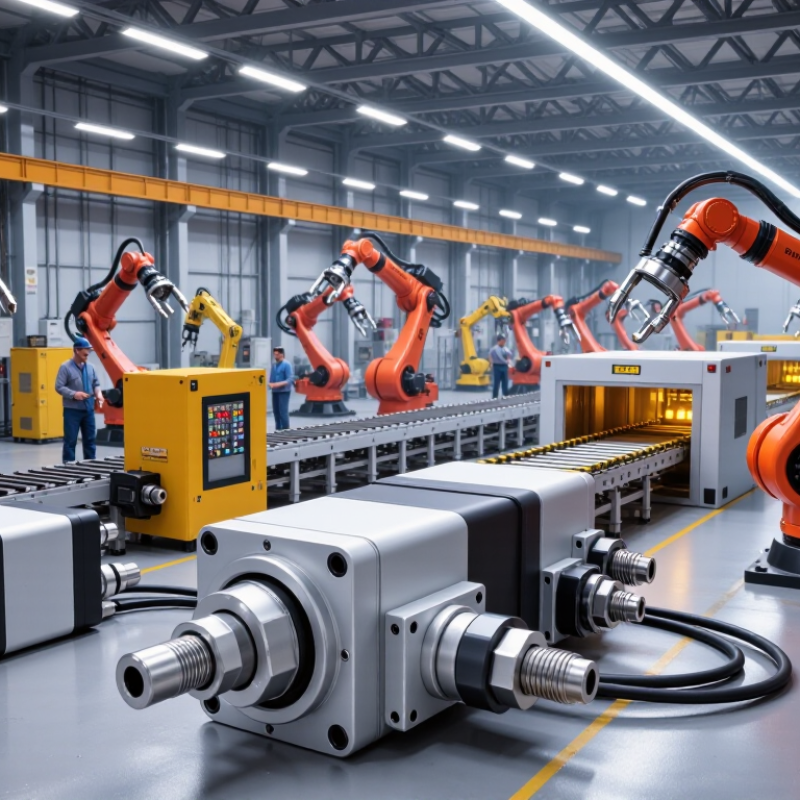
A remote control actuator converts a command into physical movement. A controller sends a signal, and the actuator moves a load, opens a valve, or adjusts a mechanism. The motion may be linear, like a sliding rod, or rotary, like a turning shaft. In many designs, an electric motor drives gears or a screw to create movement. The actuator itself is not always the complete control system; wiring, a remote device, and a controller may also be needed. Simple distinction.
Some actuators move only between set positions, while others allow more precise positioning. Models with feedback sensors can report position to a controller, but not every unit includes this feature. Buyers should check stroke length, load, speed, duty cycle, power supply, and operating environment. A unit that looks suitable on paper may run slowly under load or overheat during frequent cycles. In practice, sizing is rarely perfect on the first pass, so confirm specifications against the actual mechanism.
Tips: Measure the required travel and load before comparing products. Check whether the actuator needs to hold position without power. Ask how movement is controlled and whether position feedback is included. Leave room for mounting brackets and cable movement; these small details are easy to miss.
Remote control actuators translate an electrical command into movement. A handheld transmitter or wired controller sends a signal to a receiver. The receiver switches power to a motor, which turns gears and drives a lead screw or rotary shaft. In a linear model, the screw moves a rod in or out. In a rotary model, the output shaft turns through a set angle. Simple enough.
The control circuit may stop movement with limit switches, position feedback, or both. Limit switches prevent travel beyond set endpoints; feedback can report position to a controller. Some units move only while a button is pressed, while others accept a target position. Check voltage, rated force, stroke length, speed, and duty cycle before selecting one. For example, a hatch opened briefly needs different duty performance from a mechanism cycling all day. Mounting alignment matters, too: a twisted bracket can increase friction and shorten service life. That explanation is tidy; real installations are less so. Moisture, vibration, and changing loads can affect performance, so verify the enclosure rating and test the full motion under working conditions. Check it carefully. Do not rely on advertised force alone.
A remote sends an extend or retract command to the actuator’s controller. For a reversible DC linear actuator, the controller drives the motor, and the gearbox and lead screw convert rotation into linear rod movement. Limit switches or position feedback can stop motion at the target. This illustrative profile assumes a constant speed of 10 mm/s; it is not product test data, and actual speed and control methods vary by model.
Remote-control actuators mainly fall into four groups: electric linear, electric rotary, pneumatic, and hydraulic. Electric linear units move a rod in a straight line, making them useful for adjusting vents, valves, and compact lifting mechanisms. Rotary actuators turn a shaft or mechanism through a set angle. They suit dampers and positioning tasks. Pneumatic models respond quickly and work well in repetitive motion, but need a compressed-air supply. Hydraulic units deliver high force for heavy loads, though pumps, hoses, and leak checks add complexity. Small details matter: stroke length, load, duty cycle, control signal, and exposure to dust or moisture.
The International Federation of Robotics reported 4,281,585 industrial robots in operation worldwide in 2023, up 10% from 2022, in its World Robotics 2024 report. That figure describes automation, not remote-control actuator sales; it nevertheless shows why dependable motion components matter across industries. For global buyers, compare operating voltage, feedback options, installation space, and service access—not just rated force. An electric actuator may simplify wiring, while a pneumatic unit can be easier to maintain where air lines already exist. There is no universal winner. A spec sheet can also hide a mismatch between peak force and continuous-duty performance. Check the actual load and movement cycle before choosing.
Choosing a remote control actuator starts with the task, not the catalog. Will it lift a lid, move a valve, or position a camera? Measure the required stroke and estimate the real load, including friction and side force. An actuator rated only for peak force may struggle during repeated cycles. Allow some margin, but avoid oversizing; excess speed or force can damage connected parts.
Match the actuator’s voltage and control method to your power supply and remote system. Check its duty cycle, operating temperature, and protection rating for dust or moisture. For outdoor equipment, a sheltered test is not enough; consider rain, condensation, and temperature changes. Small details matter. A neat specification sheet can still miss an awkward mounting angle or cable route. Test the actuator under realistic load before settling on a model.
Tips: Confirm mounting dimensions, cable reach, and manual override options before ordering. Run a full-cycle test at the expected load; real installations can reveal poor fit, excess noise, or slower movement than expected.
There is no single best actuator for every application. Compare the motion required, load, available power, duty cycle, environment, and control system before selecting a solution.
| Actuator Type | Motion and Power | Typical Strengths | Key Considerations | Suitable Applications | Remote-Control Options |
|---|---|---|---|---|---|
| Electric linear actuator | Linear motion; commonly available in 12 or 24 V DC versions, with other supply options depending on the model. | Does not require a compressed-air or hydraulic supply. Position, speed, and travel can be controlled with compatible electronics. | Check rated force, stroke, speed, duty cycle, thermal limits, and whether the actuator can hold a load when power is removed. | Adjustable equipment, access panels, furniture, machinery, and mobile equipment. | Switch, relay, controller, or compatible network interface; position feedback may be available as an option. |
| Pneumatic cylinder | Usually linear motion powered by compressed air. Many industrial systems operate around 0.4–0.7 MPa (4–7 bar); confirm the component's rated pressure. | Simple construction and fast cycling; suitable where a compressed-air system is already available. | Force depends on pressure and piston area. Air compressibility can affect stiffness and precise positioning; valves, air preparation, and exhaust routing are required. | Packaging, clamping, sorting, and repetitive machine movements. | Solenoid valve controlled by a PLC, relay, or remote I/O. Position sensing or proportional control requires compatible components. |
| Hydraulic cylinder | Linear motion powered by pressurized hydraulic fluid. Many industrial systems operate in the 10–25 MPa range, though system and component ratings vary considerably. | Can produce high force from a compact cylinder; suitable for heavy loads and demanding applications. | Requires a pump, reservoir, valves, hoses or pipes, and fluid management. Assess leakage risk, maintenance, temperature, and pressure ratings. | Heavy machinery, lifting equipment, presses, and construction or agricultural equipment. | Directional or proportional valves can be controlled electrically. Feedback and remote monitoring depend on the system design. |
| Electric rotary actuator or geared motor | Rotational motion; supply and output depend on the motor and gearbox configuration. | Useful for turning valves, dampers, gates, and mechanisms. Reversible rotation and remote operation are widely achievable with suitable controls. | Specify required torque, rotation angle, speed, starting load, backlash tolerance, and whether a brake or position feedback is needed. | Valve automation, dampers, indexing mechanisms, and remotely operated controls. | Relay, motor controller, or compatible industrial control interface; limit switches, encoders, or position transmitters may be available. |
| Check | How to Estimate | Example or Selection Note |
|---|---|---|
| Pneumatic cylinder extension force | Ideal force = pressure × piston area; piston area = π × bore diameter² ÷ 4. | At 0.6 MPa, a 50 mm bore gives approximately 1,180 N of ideal extension force before friction and other losses. Retraction force is lower because the rod reduces effective piston area. |
| Hydraulic cylinder extension force | Ideal force = pressure × piston area. | At 16 MPa, a 50 mm bore gives approximately 31,400 N of ideal extension force. Confirm actual working pressure, safety factors, and component ratings. |
| Electric actuator load | Size for the required force or torque throughout the full movement, including friction, acceleration, and external loads. | Check the manufacturer's rated load, speed at load, duty cycle, mounting orientation, and holding behavior. Do not select on maximum force alone. |
| Travel, speed, and operating life | Define the required stroke or rotation, movement time, cycles per hour, and expected service life. | Confirm these requirements against the actuator's rated limits and the control system's capabilities. |
| Environment and installation | Consider temperature, moisture, dust, corrosion, vibration, available space, and cable or hose routing. | Select an appropriate enclosure and materials for the actual installation. An ingress-protection rating applies only to the specified product configuration and installation conditions. |
Note: Pressure ranges and force examples are general engineering references, not product ratings or guarantees. Actual output depends on the actuator dimensions, operating conditions, losses, and manufacturer specifications. Verify loads, safety requirements, electrical compatibility, and local regulations before purchase.
For global buyers, a remote-control actuator is only as useful as its documentation, delivery plan, and after-sales support. Check the stated input voltage, duty cycle, stroke length, load rating, and control interface against your actual installation. Ask for test reports and clear drawings, not just a catalog image. Standards vary by destination and application. Confirm which electrical, radio, and ingress-protection requirements apply locally before ordering; a supplier’s compliance claim may not cover every configuration. Some details get missed.
Actuators can be compact, but cartons still need protection from impact, moisture, and loose connectors. Request packed dimensions, gross weight, lead time, and shipping terms in writing. For multi-country projects, verify whether spare cables, mounting brackets, and manuals are included in each shipment. Customs clearance may add days, so plan commissioning with a buffer instead of promising a fixed start date. A small delay matters.
Before placing a large order, test one unit under load and compare its speed, noise, and repeatability with the specification. Ask how faults are diagnosed remotely, what photographs or logs are needed, and whether replacement parts are stocked near your region. Good support is practical. Response times can differ by time zone, so get service hours and escalation contacts before installation. Specifications rarely tell the whole story.