Garage Openers - PFC CONTROLS | Miami, Gate Operators, Sliding Gate, Swing Gate, Intercoms, Turnstiles, Bollards, Barrier gate



Best Diesel Pile Hammer Manufacturers in China for Buyers
Reliable foundations matter as cities expand and transport networks reach harder ground. The United Nations’ World Urbanization Prospects: 2018 Revision projects that 68% of the global population will live in urban areas by 2050. The Global Infrastructure Hub and Oxford Economics estimated in Global Infrastructure Outlook (2017) that infrastructure investment needs could reach $94 trillion by 2040. These forecasts do not guarantee demand for any single piling method, but they explain why buyers scrutinize foundation equipment closely.
A Diesel Pile Hammer can suit projects requiring impact driving for steel or precast piles, especially where access and ground conditions shape equipment choices. Yet published impact energy, operating weight, fuel use, and compatible pile sizes tell only part of the story. Buyers should also examine manufacturing records, inspection processes, spare-parts availability, operator guidance, and after-sales response. Ask for test documentation and references from comparable projects. Real conditions differ. Soil, pile design, maintenance, and operator skill all affect results.
This guide introduces leading Chinese manufacturers through practical purchasing questions, not marketing claims alone. It considers product range, technical documentation, customization, quality controls, export experience, and service support. A polished catalog is not proof of field performance. That deserves reflection. Manufacturer rankings can also change as product lines and service networks develop, so buyers should verify current details directly. The strongest supplier is not automatically the largest; it is the one whose equipment and support match the project’s verified requirements.
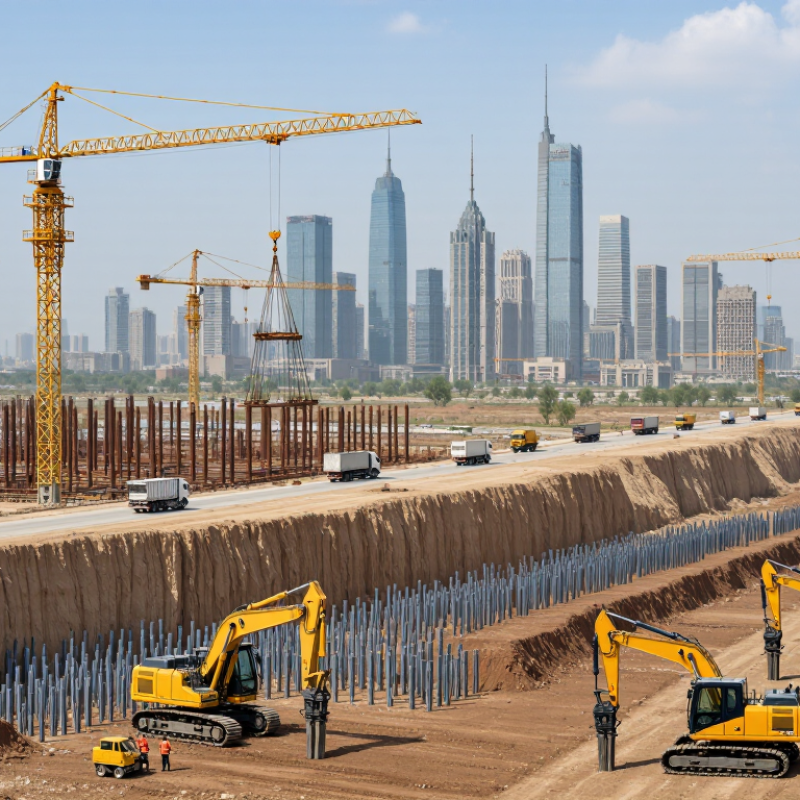
Understanding Diesel Pile Hammers and Their Main Applications
A diesel pile hammer drives a pile into the ground through repeated impact. Its ram falls inside a cylinder, compressing air and igniting a measured fuel charge. The resulting force lifts the ram for another cycle. No external crane-mounted power pack is needed to create each impact, though suitable lifting equipment and careful setup remain essential. It is a rugged machine. It can also be noisy.
These hammers are commonly used to install steel, concrete, or timber piles for building foundations, bridges, ports, and retaining structures. They are most useful where piles must reach a specified depth or bearing resistance in firm ground. Actual performance depends on soil layers, pile dimensions, hammer energy, and site conditions; the same hammer can behave differently across a short distance. That matters. Operators monitor penetration per blow and watch for pile damage, excessive vibration, or unexpected refusal. A simple field note can reveal a problem early. Yet impact counts alone do not prove that a foundation is adequate. Engineers should review soil information and, where appropriate, verify installation with testing. Diesel hammers suit many demanding projects, but their weight, emissions, and impact noise may make them a poor fit for sensitive sites. Choosing one takes judgment, not just a catalog rating.
Best Diesel Pile Hammer Manufacturers in China for Buyers - Understanding Diesel Pile Hammers and Their Main Applications
| Evaluation Area | Typical Information | Buyer Considerations |
|---|---|---|
| Operating principle | A diesel pile hammer uses a freely moving ram and a fuel-and-air combustion cycle to deliver repeated impacts to a pile. | Confirm that the hammer type and operating method suit the pile, ground conditions, and project requirements. |
| Main hammer types | Common designs include open-end and closed-end (tubular) diesel hammers. Their construction and operating characteristics differ. | Ask for the operating manual, compatible pile range, and application guidance for the specific design offered. |
| Impact energy and ram weight | Values vary substantially by model. Commercial equipment ranges from compact hammers for lighter piling work to heavy units for large piles; energy ratings should be checked against the manufacturer’s data. | Compare rated energy, ram weight, stroke, and the recommended pile capacity. Do not select by hammer weight alone. |
| Compatible pile materials | Depending on the hammer, helmet, and driving system, applications can include steel H-piles, steel pipe piles, precast concrete piles, and timber piles. | Verify pile dimensions, helmet and cushion requirements, and any restrictions for the selected pile material. |
| Common applications | Driven foundations for bridges, ports and marine structures, industrial facilities, retaining works, and other projects where impact driving is suitable. | Assess soil profile, required pile capacity, access, working platform, and nearby structures before choosing the equipment. |
| Ground conditions | Driving performance depends on soil resistance, pile type, hammer energy, and setup. Very hard layers or obstructions may affect penetration and operating efficiency. | Provide geotechnical information and pile details when requesting a model recommendation; confirm the basis for any performance estimate. |
| Noise and emissions | Diesel impact driving produces noise, vibration, and exhaust emissions. Project limits and local regulations vary by location. | Check permit requirements, working-hour restrictions, environmental controls, and proximity to sensitive buildings or communities. |
| Quality and documentation | Relevant documents may include technical drawings, material and inspection records, operating instructions, maintenance schedules, and test or inspection reports. | Request documents for the exact model and order, and confirm applicable standards, inspection scope, and warranty terms. |
| Parts and after-sales support | Wear parts and service needs depend on design, operating hours, fuel quality, and site conditions. | Check spare-parts availability, delivery lead times, troubleshooting support, training options, and recommended maintenance intervals. |
Note: Equipment specifications and suitability vary by model and project conditions. Confirm all ratings and application recommendations with the supplier and project engineer.