10 Best Inverter Voltage Stabilizers for Global Buyers
Voltage fluctuations can turn ordinary equipment into a source of daily uncertainty. A refrigerator compressor starts, lights dim, and sensitive electronics may restart. In some regions, the challenge is a weak grid; elsewhere, it is a generator or solar system with changing loads. An Inverter Voltage Stabilizer can help keep supply voltage within a usable range, but performance depends on the unit and the conditions around it. Details matter.
Demand is rising. The International Energy Agency’s Electricity 2024 report projects average global electricity-demand growth of 3.4% per year through 2026, driven by electrification, cooling, and data centres. This forecast does not measure voltage fluctuations directly. It does underline why buyers should assess local supply conditions, rather than choose a stabilizer by price or headline capacity alone. A nameplate rating is only a starting point.
For global buyers, the practical checks are input-voltage range, output accuracy, rated load, phase, frequency compatibility, response time, and overload protection. A unit intended for a 230-volt single-phase home may not suit a 120-volt workshop or a three-phase commercial site. The trade-off is real. Wider correction ranges, quieter operation, and stronger protection can affect cost and installation needs. A stabilizer also cannot replace proper grounding, surge protection, or backup power during an outage. Those distinctions are easy to miss. This guide compares ten options through specifications and fit, while recognizing that product claims deserve verification against manuals and local operating conditions.
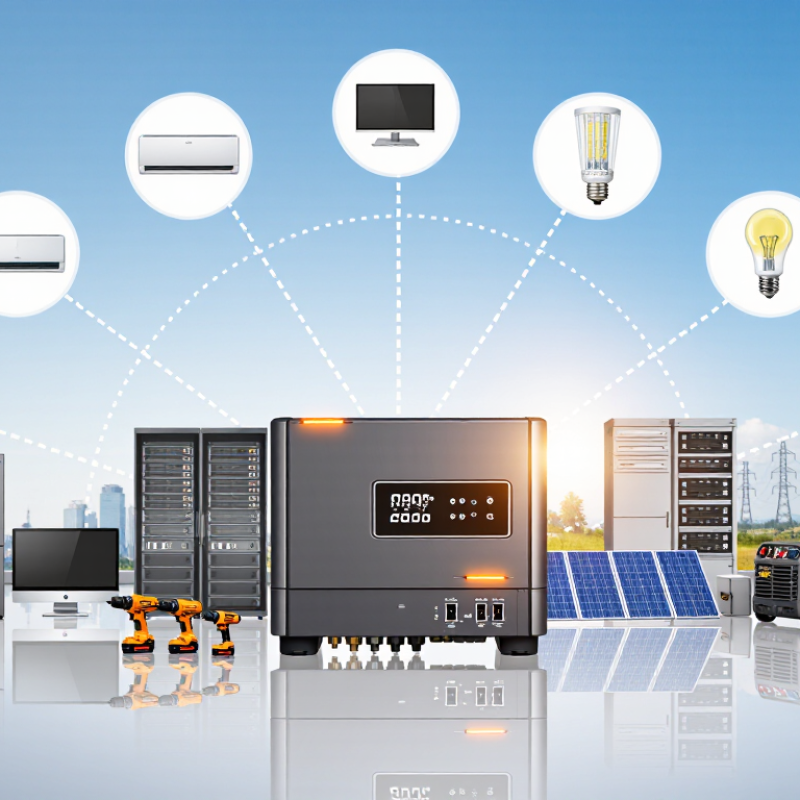
How Inverter Voltage Stabilizers Work Across 230 V/50 Hz and 120 V/60 Hz Grids
Across 230 V/50 Hz and 120 V/60 Hz grids, an inverter voltage stabilizer must handle more than a changing voltage. Many designs convert incoming AC to DC, then use an inverter to produce a steadier AC output. The exact process varies by unit. Some regulate voltage while retaining the grid frequency; others may offer frequency conversion. Check the specifications rather than relying on the product category alone. Details matter.
A device rated for 230 V and 50 Hz may not suit a 120 V, 60 Hz supply, even with an adapter. Confirm the input range, output voltage, frequency, waveform, and power rating against the appliance label. For example, a motor marked 120 V/60 Hz can run differently on 50 Hz, potentially affecting speed or heat. A stabilizer does not automatically correct that mismatch. Allow headroom for startup surges from compressors or pumps, and verify that the unit supports the load continuously. Installation conditions matter too: poor ventilation can raise operating temperatures, while unsuitable wiring can undermine otherwise good regulation. The awkward part is that “stable output” can mean different things between designs, so request a clear output tolerance and frequency specification before buying.
Key Specifications: Input Range, kVA Capacity, Response Time, and Output Tolerance
When comparing inverter voltage stabilizers for global buyers, check the input range against real site conditions. A unit rated for 140–260 V may not protect equipment where supply voltage regularly falls below 140 V. Measure voltage at different times, especially during peak demand. A wider range can help, but it does not fix every power-quality problem.
Match kVA capacity to the connected load, not just its normal running wattage. Motors and compressors may draw extra current when starting. Leave reasonable headroom, and confirm the stabilizer’s rating applies under your local temperature conditions. Response time matters when voltage changes quickly; however, published figures may use different test conditions. Output tolerance shows how closely the unit maintains its target voltage. Check that the tolerance suits the connected equipment, rather than assuming tighter is always necessary.
Tips: Read the full test conditions behind each specification. Check the load. If possible, compare measured voltage with the unit’s stated input range before purchase. Specs can look precise, yet real installations are messy; cable length, load changes, and installation quality may affect performance. A careful comparison is useful, but it cannot replace an on-site assessment.
Global Safety Benchmarks: IEC 60038 Voltage Ratings and IEC 61000-4-5 Surge Tests
For global buyers, voltage compatibility starts with the supply conditions at the installation site. IEC 60038 sets standard voltage values for public electricity systems. Compare those values with the stabilizer’s rated input and output, not just its headline range. A wide input range may help where voltage dips are frequent, but it does not prove that output stays stable under every load. Small details matter.
IEC 61000-4-5 describes methods for testing immunity to electrical surges, including transient pulses that can enter through power lines. Check the specified test level, coupling method, and performance criteria in the product documentation. A surge test is not a guarantee against every lightning event or wiring fault. Ask for a relevant test report, and confirm that the tested configuration matches the model you plan to buy. A datasheet can still leave gaps.
Tips: Match the unit’s rated voltage and frequency to the site supply. Check grounding and protective-device requirements with a qualified installer. If documentation is unclear, ask before purchase. It is easy to overlook frequency.
10 Best Inverter Voltage Stabilizers by Load Type, Region, and Use Case
Choosing an inverter voltage stabilizer starts with the load, not the headline rating. A refrigerator or pump can draw several times its running current during startup; a router cannot. Check the nameplate watts, power factor, and surge demand, then allow practical headroom. Fit comes first. The IEA’s Electricity 2024 report projects global electricity demand to grow by about 3.4% annually through 2026. That broad trend does not predict voltage quality at your socket, so local measurements still matter.
For homes with sensitive electronics, look for stable output and documented protection against overload and overheating. Workshops with motors need strong surge capacity and suitable duty ratings. Regional supply also changes the choice: confirm input voltage, frequency, phase, and plug or wiring requirements for the installation site.
In hot, dusty rooms, ventilation and service access matter more than a tidy specification sheet. A spreadsheet can still miss a pump’s brief startup spike.
Tips: Measure the load during startup if possible. Compare continuous and peak ratings, not just “VA.” Keep the stabilizer dry, leave airflow around its vents, and ask a qualified electrician to verify the circuit. If voltage swings are frequent, record them before buying; one reading may tell an incomplete story.
Sizing and Comparing Models: Watts, VA, Power Factor, and Warranty Terms
Compare stabilizers by both watts and VA, not by one headline number. Watts measure usable power; VA measures apparent power. Divide the expected watt load by its power factor to estimate the VA requirement. A 1,000-watt appliance at a power factor of 0.8 needs about 1,250 VA before extra headroom. Motors, pumps, and refrigerators may draw more during startup. I would leave margin, though the precise surge can be hard to predict from a label.
Check the stabilizer’s continuous rating, input-voltage range, and stated overload limits. A unit rated for a narrow input range may struggle where supply voltage often dips. Add the actual loads together, including devices that might run at once. Then allow room for startup demand and avoid operating continuously at the maximum rating. Small details matter. Keep ventilation clear; a stabilizer tucked behind a cabinet may run hotter than expected.
Warranty terms deserve the same attention as capacity. Check what is covered, whether labor and replacement parts are included, and how claims are handled in your country. Some warranties exclude damage linked to overload, poor ventilation, or unsuitable installation. That can be easy to miss. Compare the written terms, local service access, and expected repair time—not just the warranty’s length. A long warranty is less reassuring if support is difficult to reach.
10 Best Inverter Voltage Stabilizer Sizes for Global Buyers
Generic capacity tiers compared by estimated real-power output. The watt figures assume a power factor (PF) of 0.8.
Estimated watts = rated volt-amperes (VA) × 0.8 PF; actual usable output depends on the unit’s specifications and load. Choose a stabilizer with enough VA capacity for the equipment’s starting surge, and confirm its input-voltage range. Warranty length, coverage, and exclusions vary by seller and market, so compare the written warranty for each specific model.