10 Best Multi Pair Instrumentation Cable Manufacturers
Multi Pair Instrumentation Cable carries low-level signals through factories, refineries, and control rooms. Its performance depends on more than conductor count. Shield coverage, pair lay, insulation, jacket material, and capacitance can all affect signal quality. A cable routed beside a variable-frequency drive faces a different challenge from one installed in a quiet instrument panel. Small details matter.
Measurement pioneer Lord Kelvin wrote, “When you can measure what you are speaking about, and express it in numbers, you know something about it.” That principle suits cable selection: compare documented electrical and mechanical properties with the installation’s actual demands. For this guide to the 10 Best Multi Pair Instrumentation Cable Manufacturers, we consider product range, technical documentation, manufacturing consistency, customization, and support. Datasheets deserve close reading. A shield described as “overall” may not meet every noise-control requirement, and a broad temperature rating does not tell the whole installation story.
Buyers should also confirm conductor size, pair identification, drain-wire construction, and compatibility with glands or trays. Ask manufacturers for test data and clear answers about application limits. A polished catalog is useful, but it cannot replace project-specific checks. No shortlist can remove uncertainty; even a well-made cable can disappoint when its environment is misunderstood. The right choice is the one whose verified specifications fit the route, instruments, and maintenance plan—not simply the most familiar brand.
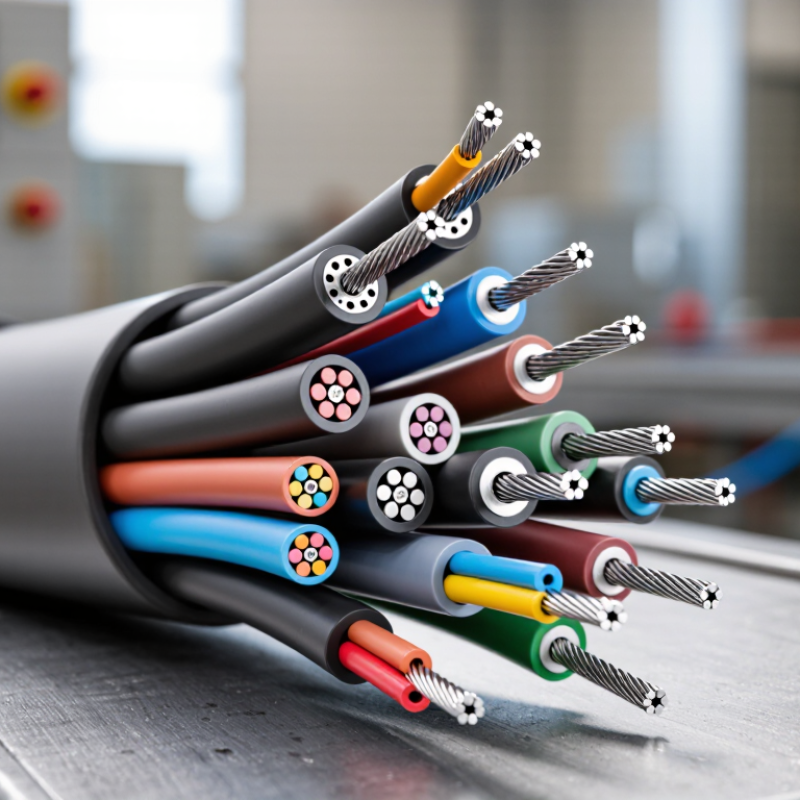
Understanding Multi-Pair Instrumentation Cables and Their Applications
Multi-pair instrumentation cables carry low-level measurement and control signals between field devices and control systems. Each twisted pair serves a separate circuit; twisting helps limit electromagnetic interference from nearby motors and power cables. Some designs add individual pair shields, an overall screen, or both. In practice, shield grounding and cable routing matter as much as the cable itself.
These cables are used around process equipment, including pressure transmitters, flow meters, and control panels. The International Energy Agency’s Energy Efficiency 2023 report estimates that industry used about 37% of global energy in 2022. That scale makes dependable process monitoring important: a noisy signal can obscure a real change in pressure or temperature. Still, shielding is not a cure-all. Poor termination, long parallel runs beside power conductors, or incorrect grounding can undermine a carefully selected cable.
Selection depends on signal type, installation environment, and required electrical performance. Check conductor size, insulation, operating temperature, pair identification, and shield construction against project specifications. IEC 60228 classifies conductor construction, but it does not by itself determine a cable’s suitability for every instrumentation circuit. A site’s actual noise conditions can be messier than the drawing suggests. IEA, Energy Efficiency 2023; IEC 60228.
Key Criteria for Evaluating Cable Manufacturers
When evaluating multi-pair instrumentation cable manufacturers, look beyond a low quoted price. Check conductor material and gauge, pair construction, and whether each pair has individual shielding or shares an overall shield. These choices affect noise control and signal consistency in crowded trays. Small details matter. Ask for cable capacitance data, operating temperature limits, and clear test reports for the proposed construction, not just a general product sheet.
Quality claims should be traceable. Ask how incoming materials, in-process checks, and finished-cable tests are recorded, and whether sample reels can be inspected before a large order. A useful report identifies the cable type and test conditions. Also review jacket material, marking durability, reel lengths, and packaging; damaged markings can slow installation and maintenance. Ask for evidence. A polished datasheet cannot show every production variation, so compare it with sample results and documented quality procedures.
Manufacturing experience matters most when it matches your application. Ask how the supplier handles custom pair counts, shielding options, and consistent delivery across repeat orders. Check whether technical staff can explain test results in plain language. Even a careful scorecard has blind spots: site temperature, grounding, and routing can change field performance. I would not treat one successful sample as proof of every future batch; request ongoing inspection records, too.
Profiles of 10 Leading Multi-Pair Instrumentation Cable Manufacturers
Profiles of ten leading multi-pair instrumentation cable manufacturers are most useful when they show how products perform in real installations. One manufacturer may specialize in flexible cables for moving equipment, while another focuses on fixed industrial runs. A third may offer foil shielding for compact, electrically noisy environments. Another may pair individual shields with an overall screen. Details matter. A fifth supplier could support custom conductor sizes, and a sixth may offer rugged jackets for outdoor exposure. Verify the actual datasheet.
A seventh manufacturer might stand out for consistent pair identification, which can reduce wiring errors inside crowded control cabinets. An eighth may provide low-capacitance designs for longer signal paths. A ninth could focus on process plants, where oil resistance and abrasion protection matter. The tenth may offer broad construction options, but a large catalog alone does not prove suitability. Not every fit.
Compare these manufacturers by conductor material, insulation, shielding, temperature range, and test documentation. Ask how the cable handles bending, moisture, and nearby power circuits. Check sample markings against the specification before ordering. A profile should distinguish proven product details from sales language; that distinction is easy to miss. Selection still depends on the route, signal type, and installation conditions.
Comparing Manufacturer Capabilities, Products, and Certifications
Choosing among the 10 best multi pair instrumentation cable manufacturers requires more than comparing catalog sizes. Grand View Research estimated the global wire and cable market at USD 202.6 billion in 2023, with projected growth of 4.9% annually from 2024 to 2030. That broader market figure signals scale, not instrumentation-cable quality. Buyers should examine pair counts, conductor sizes, insulation compounds, and shielding options against actual signal and site requirements.
Look closely at production controls. Ask whether each pair receives consistent twist lay, individual shielding, and clear identification; these details matter in crowded trays and electrically noisy plants. A useful comparison also checks test reports for conductor resistance, capacitance, insulation integrity, and crosstalk. Certifications and standards should match the intended installation. For example, IEC 60332-1-2 addresses vertical flame propagation on a single insulated wire or cable, while IEC 60754-1 evaluates halogen acid gas content. Neither standard alone proves overall product suitability. Small distinction. Request current certificates, scope details, and sample test records rather than relying on a logo in a brochure.
Manufacturers differ in customization, documentation, and lead-time reliability. Some support unusual pair counts or jacket materials; others offer faster delivery but fewer options. Ask how they manage design changes and batch traceability, then compare actual delivery records where available. One weak point in many evaluations is giving certifications more weight than application testing. A cable can meet a stated test and still be a poor fit for a specific route, temperature, or installation method.
Choosing a Manufacturer for Your Project Requirements
Choosing a manufacturer for multi pair instrumentation cable starts with the actual installation conditions. List the number of pairs, conductor size, cable length, and signal type. Then consider what the cable will face: oil, moisture, vibration, temperature changes, or tight routing. A cable suitable for a dry control room may not perform well outdoors. Small details matter.
Ask how each pair is twisted and shielded, and how the overall shield is constructed. Separate pair shields can help limit crosstalk, while an overall shield may suit installations with broader electrical noise concerns. Neither option is automatically better. Request construction details, applicable test records, and a sample when the project allows. Check markings and dimensions against your drawings. Measure twice.
A dependable manufacturer should answer technical questions clearly and flag limits early. Discuss tolerances, available jacket materials, production lead times, and how design changes are handled. If the cable must pass through a narrow tray, confirm its finished diameter and bending requirements rather than relying on a rough estimate. Ask whether routine checks cover conductor continuity, insulation, and shielding. One awkward point: the lowest quoted price can look persuasive before freight, testing, and schedule risk are included. Compare complete specifications, not just the per-meter figure, and keep written approval records for any substitutions.
Multi-Pair Instrumentation Cable: Conductor Size and Resistance
A practical cable-selection comparison: larger copper conductors have lower maximum DC resistance per kilometre. Values shown are IEC 60228 maximum resistance values for Class 2 plain copper conductors at 20°C.
Use conductor size and resistance as part of a project-specific review; also check pair count, shielding, insulation, installation conditions, and applicable standards.