10 Best Transformer Winding Machines for Buyers
Choosing a transformer winding machine means matching its capabilities to the coils you actually produce. Transformer Winding work can involve fine wire, heavy conductors, compact bobbins, or large core assemblies. Each job places different demands on tension control, spindle torque, traverse accuracy, and repeatability. Those details show up on the shop floor. A loose turn or uneven layer can waste copper and create extra inspection work.
This guide compares ten machines for buyers assessing production needs, budgets, and operating conditions. It looks at practical factors such as wire range, maximum coil dimensions, winding speed under load, programmable settings, and compatibility with existing fixtures. A clear control screen helps, but it does not replace reliable tension management or consistent setup. Buyers should also ask about installation, operator training, spare parts, and service response times. These can matter as much as the machine’s headline specifications.
Published specifications rarely tell the whole story. A machine that suits one factory may be awkward for another, especially when product changes are frequent or floor space is limited. If possible, ask suppliers to demonstrate a representative coil using your wire and bobbin. Check the finished winding, not just the cycle time. No shortlist removes the need for careful testing. The options below provide a practical starting point for comparing equipment, while leaving room to question whether each model fits your real production mix.
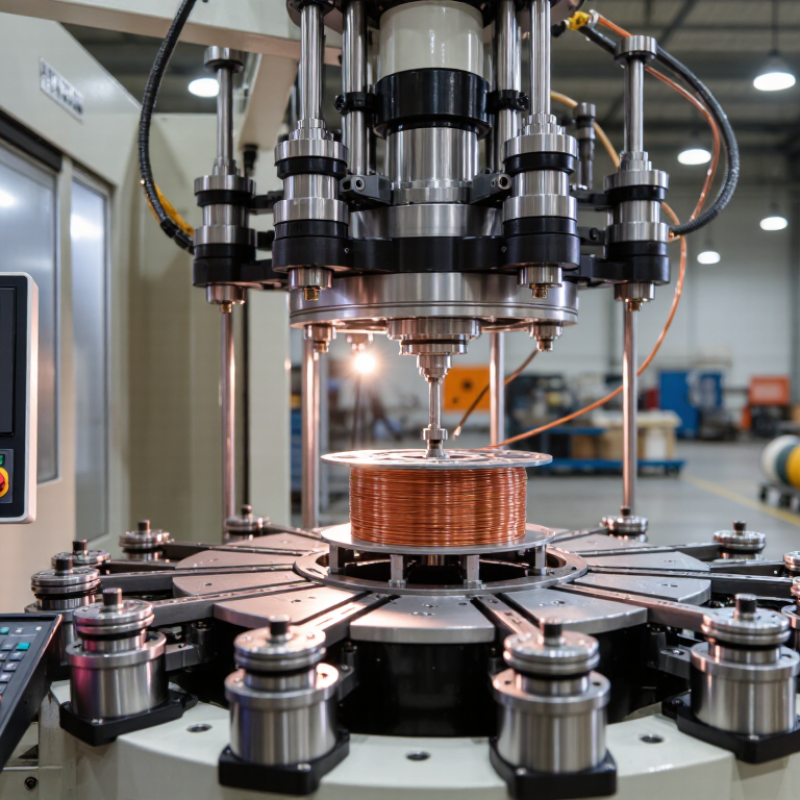
Define Transformer Types and 50/60 Hz Ratings Before Choosing a Winder
Before comparing transformer winding machines, define the transformer you need to build. A distribution transformer, an isolation transformer, and a small control transformer can require different coil dimensions, wire sizes, and winding patterns. Write down the core window, bobbin width, target turns, conductor diameter, and insulation layers. Small details matter. A wire that looks suitable on paper may not fit safely once insulation and lead-outs are included.
Confirm the intended frequency: 50 Hz, 60 Hz, or both. Frequency affects the transformer’s magnetic design, so a winding machine cannot make an unsuitable core-and-winding specification suitable by itself. Check that the machine can handle your required wire range, winding width, turn count, and tension control. For example, fine wire may need steady, low tension, while heavier wire needs secure guiding and consistent placement. Ask how the machine manages layer changes and tap leads, then test with a sample bobbin. A clean-looking coil is not enough; inspect spacing and insulation placement, too. I would still verify actual samples before ordering, since published capacity figures may not reflect your bobbin or wire combination. That extra check can feel slow. It is often cheaper than reworking a batch.
Compare 10 Machines by Wire Diameter (mm), Turn Capacity, and Winding Speed
Transformer winding machines should be compared using the same three measures: supported wire diameter, programmable turn capacity, and spindle speed. The figures below are illustrative screening profiles, not verified specifications for particular models. Confirm usable ranges with the supplier, especially for your wire insulation and bobbin dimensions.
A manual bench unit may handle 0.05–0.8 mm wire, 1,000 turns, and 300 rpm. A compact programmable winder may cover 0.02–0.5 mm, 10,000 turns, and 600 rpm. A microcoil machine may support 0.01–0.2 mm, 100,000 turns, and 1,200 rpm. A toroidal winder may suit 0.05–1.2 mm wire, 10,000 turns, and 300 rpm. A layer winder may accept 0.1–2.0 mm, 10,000 turns, and 500 rpm. A heavy-wire unit may handle 0.3–3.0 mm, 1,000 turns, and 250 rpm. A CNC universal winder may cover 0.03–1.5 mm, 100,000 turns, and 800 rpm. A multi-spindle type may wind 0.05–1.0 mm, 10,000 turns, and 1,000 rpm. A vertical coil winder may suit 0.2–4.0 mm, 10,000 turns, and 180 rpm. A high-speed bobbin unit may support 0.02–0.8 mm, 100,000 turns, and 1,500 rpm.
Speed can mislead. A rated maximum may fall when thicker wire, tight tension, or a larger coil is used. Ask for a trial winding using your actual wire, bobbin, and turn count. I would also check counter accuracy and tension control; overlooking either can make a fast machine frustrating.
10 Best Transformer Winding Machines for Buyers — Compare 10 Machines by Wire Diameter (mm), Turn Capacity, and Winding Speed | No. | Machine Configuration | Typical Wire Diameter | Typical Programmable Turn Capacity | Typical Winding Speed | Common Applications |
| 1 | Entry-Level Programmable Coil Winder | 0.05–1.2 mm round wire | Up to 999,999 turns per programmed winding step | 0–1,500 rpm | Small transformers, inductors, prototypes, and repair work |
| 2 | Precision CNC Bobbin Winding Machine | 0.02–1.0 mm round wire | Up to 999,999 turns per programmed winding step | 0–2,000 rpm | Fine-wire transformer coils and repeatable multilayer windings |
| 3 | Automatic Transformer Bobbin Winder | 0.03–1.5 mm round wire | Up to 999,999 turns per programmed winding step | 0–1,800 rpm | Production of bobbin-wound power and control transformer coils |
| 4 | Multi-Spindle Bobbin Winding Machine | 0.05–1.2 mm round wire | Up to 999,999 turns per programmed winding step | 0–1,500 rpm per spindle | Higher-volume production of matching coils and small transformers |
| 5 | Bench-Top Toroidal Winding Machine | 0.05–2.0 mm round wire | Up to 999,999 turns per programmed winding step | 0–120 rpm | Small toroidal transformers, current transformers, and chokes |
| 6 | Automatic Toroidal Core Winding Machine | 0.05–2.5 mm round wire | Up to 999,999 turns per programmed winding step | 0–180 rpm | Repeat production of toroidal transformer and inductor coils |
| 7 | Large-Core Toroidal Winding Machine | 0.2–4.0 mm round wire | Up to 999,999 turns per programmed winding step | 0–80 rpm | Larger toroidal power transformers and heavy-wire coils |
| 8 | Transformer Foil Winding Machine | Not applicable to foil; commonly handles 0.2–2.0 mm foil thickness | Typically up to 99,999 turns per programmed winding step | 0–60 rpm | Low-voltage, high-current transformer windings using copper or aluminum foil |
| 9 | Heavy-Duty Rectangular-Wire Winding Machine | Round-wire equivalent varies; rectangular conductor size is specified by width and thickness | Typically up to 99,999 turns per programmed winding step | 0–300 rpm | Power transformers and coils using heavier or rectangular conductors |
| 10 | Layer-Winding Machine with Programmable Traverse | 0.03–1.5 mm round wire | Up to 999,999 turns per programmed winding step | 0–1,200 rpm | Multilayer coils requiring controlled wire placement and insulation spacing |
Specifications are indicative ranges for common machine configurations, not guaranteed ratings for individual machines. Actual wire limits, turn-counter capacity, and operating speed depend on the machine design, tooling, core or bobbin dimensions, wire tension, and control system. Confirm the working range with the supplier before purchase.
Assess Tension Control (N), Traverse Accuracy (mm), and Coil Repeatability
10 Best Transformer Winding Machines for Buyers
Assess Tension Control (N), Traverse Accuracy (mm), and Coil Repeatability
When comparing transformer winding machines, look beyond speed and touchscreen features. Check the tension range in newtons and whether it stays stable as the spool fills. Too much tension can stretch fine wire; too little may leave loose turns. Ask how tension is measured and whether the stated range matches your wire size. Small errors compound.
Traverse accuracy, usually stated in millimeters, affects how evenly wire lays across the bobbin. A small positioning error can create crowded edges or gaps, especially on narrow winding areas. Request a test using your actual bobbin and wire, then inspect the finished layers. A precise display alone does not prove precise placement.
Tips: Run several coils with identical settings. Compare winding width, turn placement, and resistance, and record the results. Check repeatability after a changeover, not just during one smooth trial. Also ask for tolerances and measurement conditions in writing. These checks take time, and test results may still differ from production—but they reveal more than a specification sheet.
Check IEC 60317 Magnet-Wire Specs and IEC 60204-1 Machine Safety
A transformer winding machine should match the magnet wire, not just the coil dimensions. IEC 60317 contains separate specifications for different wire types, so check the exact part relevant to the conductor. Compare nominal diameter, insulation build, thermal class, and permitted dimensional tolerances with the machine’s guides and tension system. A wire that technically fits may still scrape at a guide or stretch under excess tension. Small details matter.
Ask for a sample winding using your actual wire and bobbin. Inspect the coil under good lighting for uneven layers, damaged enamel, and loose turns. Record tension settings and winding speed; these figures help repeat a successful setup. Test before ordering. Sample results are useful, but they do not prove long-term production performance. I would still want to see how the machine handles a change in wire size, because that is where a tidy demonstration can become less convincing.
Review electrical and operational safeguards against IEC 60204-1, including emergency stops, protective bonding, wiring, and isolation provisions. Check guards around rotating parts and confirm that controls are clearly labeled. Request the electrical drawings and maintenance instructions, then have qualified personnel review them for the intended installation. Standards references support a careful evaluation; they are not, by themselves, proof that a particular machine meets every applicable requirement.
Transformer Winding Machine Buyer Check: IEC 60204-1 Voltage Scope
When comparing transformer winding machines, check that the machine’s electrical equipment is appropriate for its supply. IEC 60204-1 covers equipment within the voltage limits shown below.
IEC 60204-1 scope also limits nominal supply frequency to 200 Hz. These are standard scope limits, not recommended operating voltages or machine performance ratings. For magnet wire, verify the applicable IEC 60317 part, since requirements depend on the specific wire type and dimensions.
Rank Buyers’ Choices by Output, Changeover Time, and Cost per Coil
10 Best Transformer Winding Machines for Buyers
A useful comparison ranks machines by three measures: saleable output, changeover time, and cost per coil. Nameplate speed alone can mislead. A machine may wind quickly but lose hours to setup, wire breaks, or inspection delays. Ask suppliers to demonstrate a representative coil, using your wire diameter, bobbin, and winding pattern. Record accepted coils per shift, not just theoretical cycles per hour.
Changeover time matters when orders vary. Measure the minutes needed to switch tooling, load a new program, and produce the first acceptable coil. Short runs reward flexible fixtures and clear controls. High-volume lines may favor faster winding and fewer interventions. Small details count: a misplaced guide or unclear recipe can slow a whole shift. It happens.
For cost per coil, include labor, tooling, energy, maintenance, and rejected parts—not only purchase price. Compare estimates against the same production volume and quality requirements. Then rank the ten options for your own workload: one buyer may value peak output, while another needs quick changeovers and predictable costs. Request a timed trial and written assumptions. Results can still vary with operator skill and material consistency, so leave room for uncertainty.