Garage Openers - PFC CONTROLS | Miami, Gate Operators, Sliding Gate, Swing Gate, Intercoms, Turnstiles, Bollards, Barrier gate

MENU
Go to content

How to Choose a Manual Ceramic Coffee Grinder?

Choosing a Manual Ceramic Coffee Grinder is less about picking the most attractive model and more about finding one that fits your coffee routine. Ceramic burrs resist rust and can deliver a consistent grind, but results also depend on burr alignment, adjustment range, and how steadily you turn the handle. A grinder may look sturdy on a product page and still feel awkward during a slow morning brew. Small details matter. Check the grip, lid, and grounds container, not just the burr material.

Think about how you make coffee. A pour-over often needs a medium grind, while a French press usually calls for a coarser setting. Look for clear adjustment steps and a handle that turns smoothly without wobbling. Capacity matters, too: a compact grinder travels well, but grinding several servings by hand takes time. It is easy to assume that ceramic burrs alone guarantee better coffee. They do not. Fresh beans, a suitable grind, and careful brewing all play a part.

This guide will help you compare grind consistency, adjustment, comfort, capacity, cleaning, and build quality. It will also explain what product descriptions may leave out, such as how easily grounds cling inside the cup. No single grinder suits every kitchen or travel bag. Your best choice depends on what you brew and how much effort feels reasonable. A little trial and error is normal. Even a well-made grinder may take a few adjustments before it feels right.
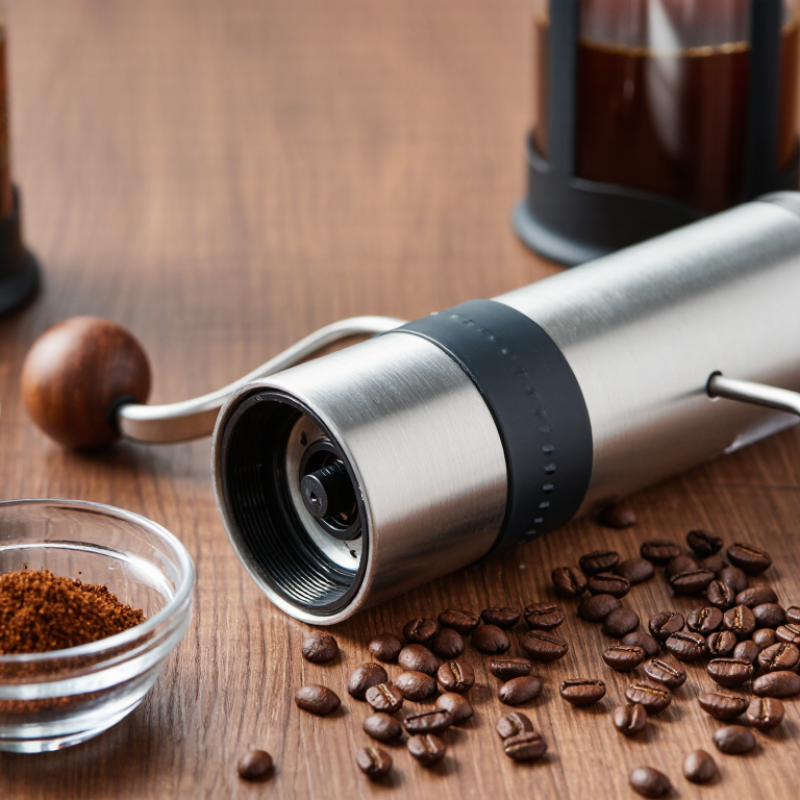
How to Choose a Manual Ceramic Coffee Grinder?

Understand How a Manual Ceramic Coffee Grinder Works

A manual ceramic coffee grinder works by guiding whole beans between two shaped burrs. Beans sit in a small hopper above the grinding chamber. Turning the handle rotates the inner burr against a stationary outer burr, breaking beans into particles. A dial or threaded adjustment changes the gap between them. A narrower gap creates a finer grind; a wider one produces coarser grounds. Small adjustments matter.

The handle’s resistance can offer a useful clue. If it suddenly feels harder, a bean may be caught, or the setting may be very fine. Turn steadily rather than forcing the crank. Some grounds may cling to the chamber or vary slightly in size; perfect uniformity is not guaranteed. That detail is worth noticing. Burr alignment, bean size, and turning speed can all affect the result. Ceramic burrs are hard and resist corrosion, but the material alone does not guarantee an even grind. Use a dry brush to clear leftover particles, and follow the grinder’s care instructions. A brief test grind can help you check whether the grounds suit your brewing method.

How to Choose a Manual Ceramic Coffee Grinder? — Understand How It Works
Feature How It Works What to Check When Choosing Practical Guidance
Ceramic burrs Two shaped burrs crush and shear beans as the handle turns. The space between the burrs helps determine the grind size. Look for burrs that sit securely and remain aligned, with no visible cracks or wobble. Ceramic is hard and resists corrosion, but it can chip or crack if dropped or struck.
Adjustment mechanism A dial, nut, or stepped setting changes the distance between the burrs to produce coarser or finer grounds. Check that settings are easy to adjust and stay in place while grinding. Confirm that the instructions explain the setting direction. Coarser grounds are generally used for French press; finer grounds are typically used for espresso. The suitable setting depends on the brewer and recipe.
Grind consistency Burr alignment and spacing influence the distribution of particle sizes. Uneven grounds can extract at different rates. Check whether the grinder produces a reasonably even grind at the setting you need, rather than relying only on the number of settings. Very fine brewing methods are especially sensitive to grind consistency. A manual grinder may require more time and effort at finer settings.
Handle and shaft The handle turns a central shaft that drives the burrs. A stable shaft helps keep the burrs aligned during rotation. Look for a handle that attaches securely, turns smoothly, and is comfortable to hold. A longer handle can provide more leverage, while a loose or poorly supported shaft can make grinding less steady.
Bean capacity Beans sit in the hopper above the burrs and feed into the grinding area as the handle turns. Match the hopper capacity to the amount you usually brew, and check that beans do not spill when loading. Many portable hand grinders hold roughly 20–40 g of beans, but capacity varies by model. Weigh beans separately for repeatable recipes.
Grounds container Ground coffee falls from the burrs into a removable container below them. Check that the container attaches securely, is easy to empty, and holds the quantity you need. A container sized for one brewing dose can be convenient for travel; a larger one may suit multiple cups.
Cleaning and maintenance Loose coffee particles and oils can collect around the burrs and adjustment parts over time. Choose a design that can be disassembled and reassembled without special tools, and follow its cleaning instructions. Use a dry brush for routine cleaning. Avoid washing ceramic burrs or grinder parts unless the manufacturer states they are washable.
Portability and build The body holds the burr assembly and provides support while the grinder is turned. Consider weight, grip, materials, and whether the handle or parts can be secured for transport. A compact grinder is easier to pack, while a sturdier base and comfortable grip can improve stability during daily use.
How the grinding process works Load whole beans, select a grind setting, turn the handle, and collect the grounds from the container. Check that the grinder is simple to load, adjust, operate, and empty for your preferred brewing method. Start with a medium setting, brew a test cup, then adjust finer or coarser based on taste and brewing time.

Match Grinder Settings to Your Preferred Brewing Method

Match your grinder setting to the time water spends with the coffee. For pour-over, start with a medium grind, similar to table salt. If the cup tastes sharp and thin, try a slightly finer setting. If it tastes harsh or dry, go a little coarser. Make one small change at a time; changing several clicks can make the result hard to judge.

For French press, use a coarse grind with visible, even particles. Too many fine bits can leave sludge in the cup. Espresso generally needs a much finer setting, but many manual grinders are not designed for espresso-level adjustment. Click ranges vary, so treat any suggested setting as a starting point, not a rule.

Tips: Keep the dose and water amount steady while testing. Write down the setting and brew time. Taste before adjusting again.

Ceramic burrs can grind consistently, but hand speed and bean freshness also affect the result. Turn the handle smoothly, and check that the adjustment is secure before grinding. I still find that “medium” can look different from one grinder to another. That is a little frustrating. Use the cup as your guide: slow dripping may call for a coarser grind, while fast, watery coffee may benefit from a finer one. Change just one variable, then brew again.

Compare Burr Design, Grind Range, and Adjustment Controls

How to Choose a Manual Ceramic Coffee Grinder?

Burr design affects how evenly beans break apart. Look for ceramic burrs that sit securely and turn without wobbling; uneven movement can leave a mix of powder and coarse fragments. Ceramic resists corrosion, but it is not indestructible. A hard drop may chip a burr. Small details matter. Check that the handle turns smoothly and the burr assembly feels stable.

The grind range should match your usual brewing methods. A grinder may handle French press and pour-over well yet struggle to produce fine, consistent grounds for espresso. If you switch methods, check the maker’s stated range and test a few settings at home. For pour-over, grounds should look fairly even, without many dusty particles. Not perfect, every time. Beans vary, and so can results.

Adjustment controls determine how easily you can repeat a setting. Click-based controls make changes measurable: note the number of clicks, then return to it later. Finer click spacing allows smaller adjustments, though too many options can slow down morning brewing. Internal controls may be protected from accidental movement, but changing them can mean opening the grinder. External controls are quicker to reach. Choose a mechanism you can adjust confidently, even with sleepy hands.

Check Capacity, Portability, and Ease of Use

How to Choose a Manual Ceramic Coffee Grinder?

A manual ceramic coffee grinder should fit your routine, not just your shelf. Capacity is the first reality check. For a single cup, check whether it holds enough beans for your usual recipe; larger brews may require repeated loading. Look for the stated bean capacity, since a roomy-looking chamber can be misleading. The National Coffee Association’s 2024 National Coffee Data Trends report found that 67% of U.S. adults had coffee in the past day. For many people, then, quick setup and simple cleaning matter every morning.

Portability depends on more than weight. A narrow, secure body is easier to pack, while a loose adjustment ring can shift during travel. Ceramic burrs resist corrosion, but they can chip if dropped on a hard counter. For ease of use, check whether the handle turns smoothly and whether grind settings are clear. The Specialty Coffee Association’s traditional brewing control chart gives a useful reference: brewed coffee extraction is commonly targeted at 18–22%. A grinder cannot guarantee that range, but consistent settings make adjustments easier. One trade-off is real: a compact grinder may need several batches for a larger pot.

Tips: Measure your usual beans before buying. Try turning the handle with one hand, and check how easily the grounds chamber opens. If you travel often, test whether the parts stay secure in a bag. A little mess may still happen.

Evaluate Materials, Cleaning Needs, and Overall Value

A manual ceramic coffee grinder should be judged by more than its burr material. Ceramic burrs resist corrosion, but the housing, handle, and adjustment mechanism also affect durability. Check for a stable grip and a burr assembly that comes apart without tools. If parts feel loose in the shop, they may become frustrating during a sleepy morning grind. Ceramic can chip if dropped, too.

Cleaning matters because fine grounds cling around the burrs and adjustment ring. Look for a design that lets you brush these areas without washing delicate parts unnecessarily; moisture left inside can encourage stale odors. The National Coffee Association’s 2024 National Coffee Data Trends report found that 67% of U.S. adults had coffee in the past day. For a daily habit, easy cleanup is practical, not cosmetic. A small brush helps. Don’t use water unless the maker’s care instructions allow it.

Compare the full cost with the expected upkeep: replacement parts, cleaning tools, and how comfortably the grinder handles your usual dose. A low price can be poor value if adjustment slips or grounds spill across the counter. Still, ceramic is not automatically the better choice; build quality and repairability vary. The report measures coffee drinking, not grinder ownership, so use it as context—not proof that one grinder suits everyone.

How to Choose a Manual Ceramic Coffee Grinder

Compare burr hardness as one material consideration. Ceramic alumina is about 9 on the Mohs scale; steel hardness varies by alloy and heat treatment. Mohs hardness is ordinal, so the values are not proportional measures of durability or grind quality.

Cleaning: Brush out dry grounds regularly and follow the grinder’s care instructions; avoid washing burrs unless the manufacturer permits it. Ceramic resists rust but can chip if dropped, while steel’s corrosion resistance depends on its alloy. For overall value, weigh burr material alongside grind consistency, adjustment range, build quality, replacement-part availability, and price.

PFC CONTROLS
1638 NW 108TH AVE. MIAMI, FL 33172
Sales: (305) 593-0227
Tech: (305) 546-3965

Copyright, All rights reserved
Back to content