I can’t responsibly provide a named expert’s quotation or specific industry statistics without verifiable source material. No articles or sources were included with your request. Please share the relevant reports or expert quote, and I can write the 200–300-word English introduction without inventing claims.
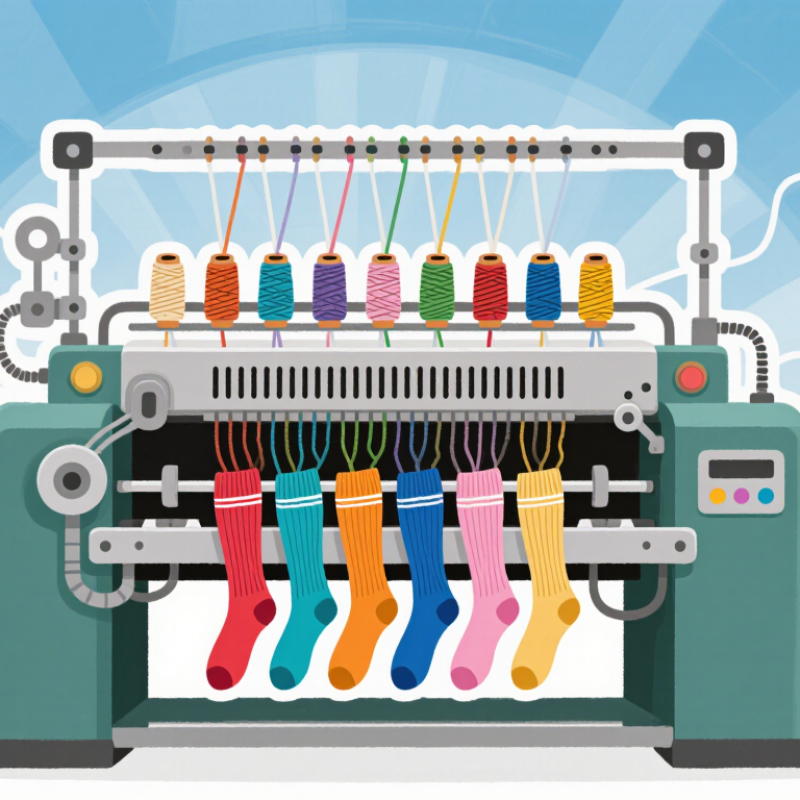
Hosiery knitting machines turn yarn into socks, stockings, tights, and other close-fitting garments. Most use circular needles: yarn feeds through guides as needles move around a cylinder, forming linked loops. Programmed settings control stitch size, color changes, ribbing, and ventilation zones.
Tiny details matter. Uneven yarn tension can leave ladders or loose cuffs; excessive tension may make fabric feel stiff.
On many sock machines, the body is knitted continuously, while heel and toe sections are shaped by changing needle action. Toe closing may be integrated or done separately. Operators check yarn tension, machine gauge, stitch length, and fabric recovery against product samples.
Textile Exchange’s 2024 Materials Market Report says global fiber production reached 124 million tonnes in 2023, with polyester accounting for 57%.
That scale makes yarn compatibility and repeatable settings important, though hosiery also uses cotton, nylon, and blends. Test the intended yarn and design, then inspect fit after washing.
It takes time. Finer gauges can produce more detail, but may require slower runs and closer maintenance.
Hosiery knitting capacity depends on more than spindle speed. Cylinder diameter, needle count, gauge, feeder layout, and machine uptime all shape daily output. A fine-gauge machine can produce detailed patterns, but it may run more slowly and need tighter yarn control. A larger cylinder can knit more stitches per course, yet that advantage disappears during frequent changeovers. Fit matters.
The Textile Exchange Materials Market Report 2024 estimates that global fiber production reached 124 million tonnes in 2023. This figure covers the wider textile industry, not hosiery alone, but it highlights the scale of material moving through production. For a hosiery mill, stable yarn feeding and repeatable stitch length help limit rejects as orders grow. Ask suppliers for tested output using your yarn, gauge, and sock construction—not just a maximum speed figure.
Product quality is shaped by needle and sinker condition, yarn tension, stitch formation, and control-system consistency. These details affect fabric density, elasticity, and the appearance of heel and toe areas. Small defects travel. A loose stitch may seem minor on the machine, then show clearly after boarding. Check samples across several yarn lots, and record downtime alongside pieces per hour. That comparison is not perfect; operator skill and maintenance can skew results. Still, it gives buyers a more realistic view of capacity.
Hosiery knitting machines can help a business produce socks and other knitted hosiery more consistently. Automated needle movements form fabric loops at a steady pace, while programmable settings support repeatable sizes and patterns. This can reduce routine handwork and make production planning easier. The benefits depend on the machine, materials, and operator skill. A machine is not a shortcut to perfect products.
For growing manufacturers, higher output can help meet seasonal orders without expanding every manual task. Some machines also support changes in stitch patterns, yarn types, or product sizes, giving businesses room to test new designs. That flexibility may reduce the need for separate production setups, though changeovers still take time. The first setup can feel slower than expected. That learning curve is real, and it should be included in cost and scheduling plans.
Tips: Track output, defects, and downtime for each shift. Compare samples after changing yarn or settings. Train operators to spot dropped stitches early. Review maintenance needs before buying; a low purchase price may not mean lower operating costs.
Why Choose Hosiery Knitting Machines for Your Business?
Factors to Consider When Choosing a Hosiery Knitting Machine
A hosiery knitting machine can help a business manage production speed, fabric consistency, and product variety. The right choice depends on what you actually sell, not the largest output figure on a specification sheet. Consider the sock types, yarns, sizes, and daily order volume you expect. A machine designed for fine dress socks may not suit thicker athletic styles. Small detail, big difference.
Check the machine’s gauge, needle count, cylinder options, and supported yarn range against your sample products. Ask for a trial using your own yarn, then inspect toe closure, elasticity, and fabric density after washing. One showroom sample is not enough. Compare setup time and changeover requirements, since frequent style changes can reduce real output. Maintenance access matters too; operators should be able to reach needles and sinkers without awkward dismantling.
Look beyond the purchase price. Estimate energy use, spare-part availability, training needs, and service response time over several years. Request written production estimates, and ask how figures change with design complexity or operator experience. If possible, speak with a technician who has maintained similar equipment. That conversation may reveal limits a brochure leaves out. Buying excess capacity can tie up cash, while a low-cost machine may become frustrating as orders grow. I’d still test carefully before committing.
Planning machine capacity: Compare your expected operating schedule with the machine’s verified production rate. These annual scheduled-hour figures are calculated for 8-hour shifts, 5 days per week, and 52 weeks per year; they do not account for maintenance, changeovers, or downtime.
Integrating hosiery knitting machines at scale starts with a clear map of the product mix. Record styles, yarn types, sizes, and expected weekly volumes before changing the production floor. Machines may share a process, but sock patterns and yarn behavior can require different settings. Small trials help. Run representative styles on a pilot line, then document needle setup, stitch settings, cycle time, and changeover steps. Keep records.
Plan the layout around the full production flow, not just machine capacity. Place yarn storage and creel access where operators can replenish safely without crossing busy work areas. Allow room for inspection, repairs, and material movement. A crowded aisle can quietly slow a line. It is easy to underestimate how much time small interruptions consume.
Train operators and technicians before adding shifts or machines. Use a simple checklist for startup, needle inspection, yarn tension, and common fault signals. Track output alongside defects, downtime, and changeover time; a high piece count alone can hide inconsistent quality. Review the figures each week and adjust staffing or maintenance intervals carefully. Not every setting transfers cleanly between styles, so confirm changes with sample runs. Scaling is rarely perfectly smooth, and early estimates may need revision. Build that learning time into the production plan.