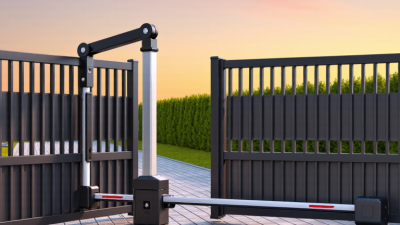
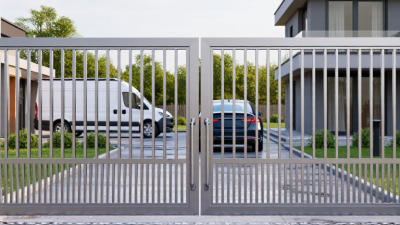
How to Choose the Best Swing Gate Opener?
Choosing the right Swing Gate Openers begins with the gate itself, not the motor’s headline power. Measure each leaf, note its material, and check how far it swings. A lightweight aluminum gate behaves differently from a broad timber gate that catches the wind. Also inspect the hinge posts. A small amount of movement can strain an opener over time.
For a buying guide, one practical reminder is worth keeping close: “Match the opener to the gate’s weight, length, and real operating conditions—not just its advertised capacity.” This is an editorially written rule of thumb, not a quotation from a named expert. A verified expert quotation was not provided, so attributing those words to a real person would be misleading. The sections ahead can compare linear-arm and articulated-arm designs, explain power and duty-cycle ratings, and identify useful features such as obstacle detection, manual release, and battery backup. Small details matter. A long driveway may need reliable remote access; a tight hinge corner may rule out some arm designs.
The best choice should feel dependable on an ordinary rainy Tuesday, not merely impressive in a product listing. Consider installation quality, maintenance access, and the opener’s instructions before deciding. No model suits every gate. A careful match usually matters more than choosing the most powerful unit.
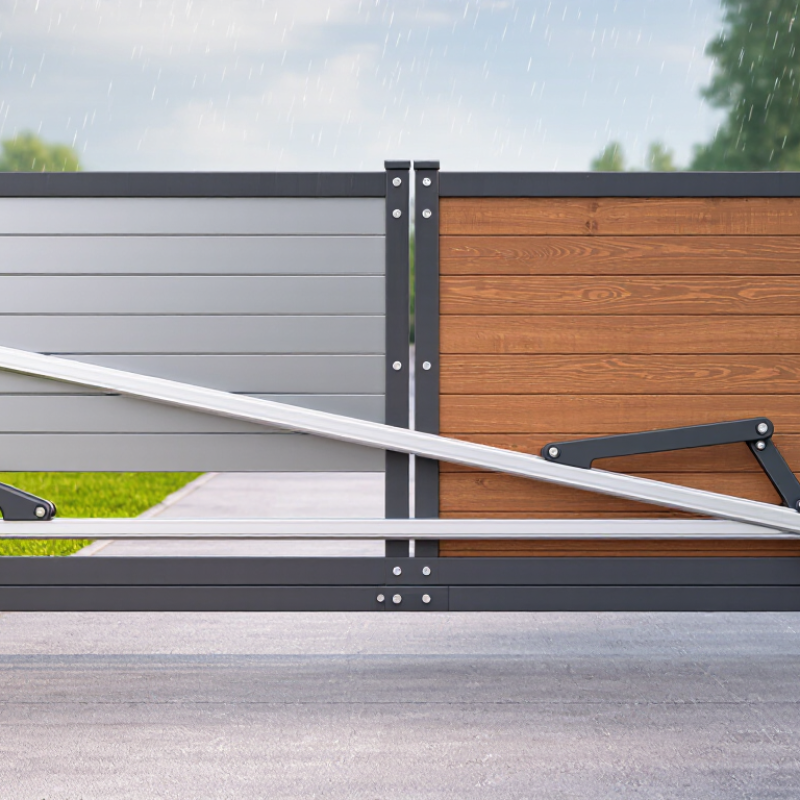
Identify Gate Type, Leaf Length, Weight, and Daily Cycle Count
How to Choose the Best Swing Gate Opener?
Identify the gate type before comparing openers. A single-leaf gate needs one operator, while a two-leaf gate usually needs a matched pair. Measure each leaf from hinge to outer edge. Longer leaves place more leverage on the hinges and opener, even when the gate feels light. Check hinge movement by hand; dragging or sagging can strain a new system.
Weigh each leaf if possible, rather than guessing from its material. A steel frame with solid infill may catch wind like a sail. Also consider slopes, exposed locations, and how often the gate opens each day. Match the opener’s rated leaf length, weight, and cycle capacity to your actual conditions. A small margin can help, but oversizing is not a substitute for sound hinges. I have seen this detail overlooked.
Tips: Count a full open-and-close as one cycle, and estimate busy-day use, not just the weekly average. Note the measurements and check them against the opener’s installation guide. Recheck your assumptions.
Compare Operator Ratings for Gate Size, Load, and Duty Cycle
A swing gate opener should match the gate’s dimensions, weight, and daily workload—not just its advertised maximum. Check the operator’s rated gate length and load separately. A long gate can catch more wind, even when its weight seems modest. Solid panels are especially demanding on exposed driveways. Measure each leaf, including its frame and cladding, and note whether the gate slopes or drags.
Allow for real conditions. A rating based on a sheltered, well-balanced gate may not reflect one facing gusts or frequent use. Check the installation manual for both maximum dimensions and maximum weight; meeting one limit does not cancel out exceeding the other. Measure twice. Then compare the duty cycle, usually expressed as operations per hour or a percentage of running time.
Count a full opening and closing as two movements if the manufacturer defines it that way. A household gate used a few times daily needs a different cycle rating from a shared entrance serving steady traffic. It is tempting to choose the largest operator available, but that can add cost without fixing poor hinges or alignment. Ratings are useful, not magic. Inspect the gate’s movement by hand and confirm the operator’s limits with the supplier when your measurements sit near the maximum.
Match Power Supply, Solar Output, and Battery Capacity to Site Data
Start with the gate and its daily workload, not a motor’s advertised rating. Measure each leaf and note its material, hinge condition, and exposure to wind. A long, solid gate may demand more starting force than a lighter gate of similar weight. Count expected opening cycles, including deliveries and family use. Real traffic is easy to underestimate.
Check the available supply at the installation point. Confirm voltage and whether the circuit can handle the opener’s starting current; a long cable run can cause voltage drop. For solar, record hours of direct sun across the seasons, not just on a clear afternoon. Trees, roof shadows, and winter light all reduce output. Small details matter. Use local sunlight data and the opener’s energy use per cycle to size the panel, then allow a sensible margin.
Battery capacity should cover ordinary use through cloudy periods and brief outages. Estimate daily cycles, then consider how many days of reserve the site needs. Cold weather can reduce usable capacity, while a stiff hinge quietly adds load. I have seen a technically adequate solar setup struggle because the gate was poorly aligned. That part is easy to overlook. Match the panel, battery, and opener as a system, and verify their voltage compatibility and charging limits in the equipment specifications.
Verify UL 325 Entrapment Protection and ASTM F2200 Gate-Safety Requirements
When choosing a swing gate opener, check safety documentation—not just motor force or opening speed. UL 325 addresses entrapment protection for gate operators. Look for monitored sensors, such as photoelectric eyes or safety edges, that make the operator stop or reverse when triggered. Confirm they are included, correctly positioned, and compatible with the opener. Test them with a person clear of the gate, following the manufacturer’s instructions. Small gaps matter.
ASTM F2200 covers automated-gate construction, including openings, rollers, and areas where someone could become trapped. A compliant opener cannot compensate for a poorly designed gate. Check hinge-side gaps, exposed rollers, and the space between the moving gate and nearby walls or posts.
The U.S. Consumer Product Safety Commission has reported at least 32 child deaths involving automatic gates since 1985. That history makes installation details hard to dismiss.
Ask the installer to identify the applicable UL 325 and ASTM F2200 editions and document the safety-device test. I would still inspect the gate after installation; paperwork alone does not show how it behaves on a cold, wet morning.
Assess Opening Speed, Weather Rating, Warranty, and Installation Needs
A swing gate opener should match how the gate is used, not just how quickly it moves. Check the opening speed against daily traffic: a slower cycle may suit a quiet home, while frequent vehicle access calls for less waiting. Do not choose the fastest unit by default. A heavy gate can strain an undersized operator, and wind can make movement harder.
Weather ratings matter when the motor and controls face rain, dust, or salty air. Look for a clearly stated protection rating, and check whether it applies to the full unit or only certain parts. A sheltered control box may still need careful placement. Small details count. Also ask how often exposed hinges and moving parts need inspection.
Read the warranty terms before comparing prices. Note the coverage period, exclusions, and whether labor or replacement parts are included. Installation needs can change the real cost. Measure the gate’s length and weight, inspect its hinges and posts, and confirm that a nearby power source is suitable. Solar power may work in some locations, but shade and seasonal light can reduce reliability. This is easy to overlook. If the gate binds by hand, fix that problem before fitting an opener; an operator is not a repair for poor alignment.
How to Choose the Best Swing Gate Opener?
Compare opening speed, weather protection, warranty coverage, and installation requirements before choosing an opener.
Understanding the chart: The second digit in an IP code indicates water protection under specified test conditions: IPX4 protects against splashing, IPX5 against water jets, IPX6 against powerful water jets, IPX7 against temporary immersion, and IPX8 against continuous immersion under conditions set by the manufacturer. These ratings are categories, not a linear measure of overall weather resistance; they do not describe wind or corrosion resistance.
For the other criteria: Compare each opener’s published gate-opening time, warranty terms and exclusions, and stated requirements for gate weight, width, power supply, and mounting. Installation needs depend on the gate and site.