Choosing a Commercial Drain Cleaning Machine is not simply a matter of buying the most powerful model. The right choice depends on pipe diameter, blockage type, access, and how often the equipment will be used. A compact cable machine may suit routine work in smaller lines, while larger or more demanding jobs can require a sectional machine or a water jetter. The details matter: a machine that cannot reach the cleanout, fit the pipe, or be operated comfortably may slow the job rather than solve it.
A practical rule for buyers is: “Match the machine to the pipe, the blockage, and the operator—not just the price.” This is an editorially composed principle, not a verified quotation from a named industry expert; a reliable expert attribution would need a supplied source. When comparing machines, check cable or hose range, compatible attachments, portability, safety features, maintenance needs, and available training. Imagine moving the unit through a narrow service hallway, then feeding the cable into a drain while water and debris collect nearby. Those working conditions deserve as much attention as the motor rating. A higher-capacity machine is not automatically the better choice. It may add cost, weight, and complexity without helping with the work you actually perform. Be honest about your typical jobs, but leave room for occasional tougher calls. This guide explains how to weigh those trade-offs and choose equipment that fits your crew, workload, and service needs.
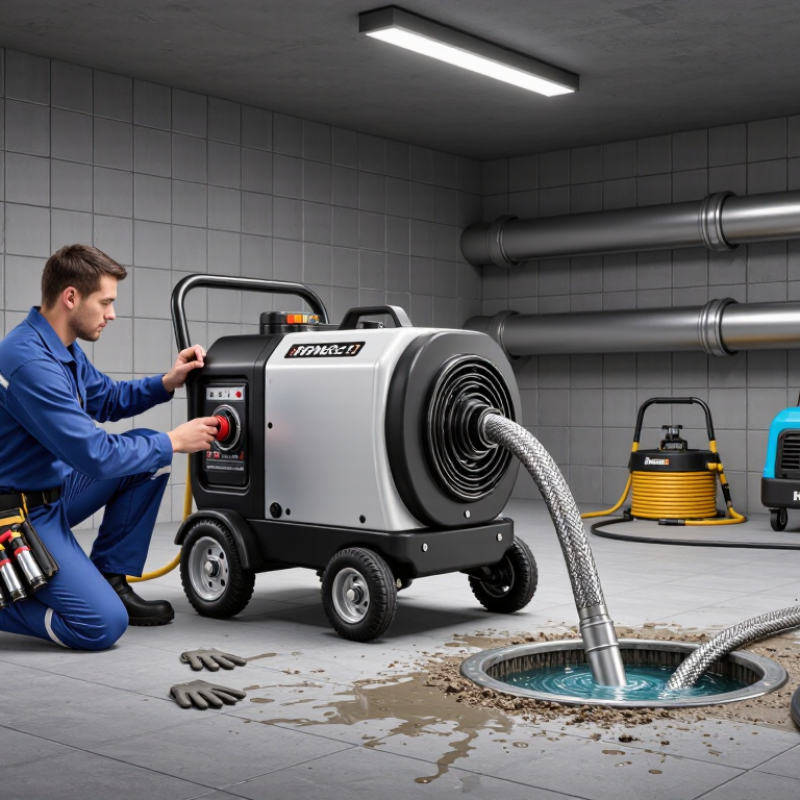
Before choosing a commercial drain cleaning machine, map the lines it must handle. Note pipe diameter, material, approximate length, and access points. A floor drain serving a kitchen may collect grease and food scraps, while a long building lateral may hold roots, scale, or settled debris. The same machine may not suit both jobs.
Match the machine’s cable or hose capacity to the pipe, not just to the visible blockage. Small lines can be damaged by oversized equipment, and a short cable may leave a distant obstruction untouched. Check bends, cleanout locations, and whether the line changes size. These details affect reach and maneuverability. They are easy to overlook.
Identify what is blocking the line before selecting cutting or clearing tools. Soft grease, fibrous roots, and hardened mineral deposits need different approaches. If the cause is uncertain, inspect the line where practical rather than forcing a tool through resistance. A camera inspection can help confirm distance and pipe condition. Field notes are sometimes incomplete; mine have been, too. Recheck measurements before buying, especially when several crews will use the machine on different drain lines.
Commercial drain cleaning machines differ by cable design, cleaning method, and the blockages they handle. Sectional machines use short, interchangeable cable lengths, making them practical in buildings with tight access or frequent turns. Drum machines store a longer cable in one housing; they suit repeated work on similar pipe runs, but the heavier unit can be awkward on stairs. Match cable and cutter size to the pipe, not just the machine’s advertised capacity. A cable that is too large may bind in a bend.
For grease and soft deposits, a water-jetting machine can scour pipe walls and carry loosened waste downstream. It needs a reliable water supply and careful control around fragile lines. Cable machines with cutting heads are often better for roots or hardened obstructions. Different job, different tool. The U.S. EPA’s 2022 Clean Watersheds Needs Survey estimated $630.1 billion in wastewater infrastructure needs over 20 years. That figure describes system-wide needs, not equipment performance, but it underlines why protecting older pipes matters. Check pipe material, access, blockage history, and cleanup requirements before choosing. In practice, the “strongest” machine is not always the safest choice. I’d verify the actual line conditions first; estimates can be wrong.
Evaluate capacity against the pipes you actually service, not the largest line listed in a sales description. Check compatible pipe diameter, cable length, and the machine’s ability to manage bends. For example, a long run with several elbows may need more cable than a short, straight floor drain. Match cable diameter and cutter head to the pipe and obstruction. Common setups use smaller cables for branch drains and thicker cables for larger lines, but verify the machine’s operating chart. A cutter that is too large can bind; one that is too small may pass through grease or roots without clearing them. Fit matters.
Power should suit the workload and operator. Electric machines can be practical indoors, where exhaust is a concern; heavier jobs may require stronger torque and controlled cable feed. Look for a stable frame, accessible shutoff, and a clutch or equivalent protection against cable jams. The U.S. EPA’s 2022 Clean Watersheds Needs Survey estimated $630.1 billion in wastewater infrastructure needs over 20 years. That figure describes public infrastructure, not drain-machine specifications, but it signals the scale of maintenance demand. On site, test the cable path and drainage route before choosing. I’d still leave room for judgment: pipe condition and blockage type can change the right setup. No chart replaces inspection.
A commercial drain cleaning machine works near water, metal edges, and rotating cables, so safety features deserve close attention. Look for a stable frame, a cable guard, and a foot pedal that stops the motor when released. Use a ground-fault-protected outlet where required, and inspect the power cord before each shift. Wear eye protection and gloves suited to the task. Small details matter.
Portability affects how often a machine is practical, not just how easy it is to move. Check its weight, wheel size, handle height, and balance on wet floors. A compact unit may fit through a narrow doorway but lack the reach needed for larger lines. Measure stairways and storage spaces before buying. I have seen “portable” equipment become awkward once cables and tools are loaded beside it.
Maintenance needs can decide whether a machine stays reliable through repeated jobs. Ask how easily the drum or cable can be accessed for cleaning, and whether routine checks require special tools. After use, remove debris, rinse and dry components as directed, then inspect the cable for kinks, rust, or fraying. Follow the manual’s lubrication and replacement intervals. It is easy to skip a check during a busy day; that habit can cost more than a few minutes.
A commercial drain cleaning machine should fit the jobs you actually receive, not the largest pipe you might encounter once a year. A compact cable machine may suit short indoor lines and frequent service calls. A larger sectional or drum machine can make sense when crews regularly clear longer runs or larger pipes. Check access, pipe diameter, cable length, and transport needs before comparing prices. Awkward stairs matter.
The U.S. EPA’s 2022 Clean Watersheds Needs Survey estimated $630.1 billion in wastewater infrastructure needs over 20 years. That national figure signals substantial system demands, but it does not predict your local call volume. Use your own service records instead: track pipe sizes, blockage types, job duration, and repeat visits for several months. A simple spreadsheet can still miss seasonal patterns, so review it with technicians.
Include more than the purchase price. Compare cable and cutter costs, cleaning and repair time, operator training, storage, and the cost of downtime. The U.S. Bureau of Labor Statistics projects 6% employment growth for plumbers, pipefitters, and steamfitters from 2023 to 2033. That makes ease of training worth considering when crews are busy. Test a shortlisted machine on a typical job, with the operator who will use it. A machine that looks efficient in a catalog may feel heavy in a narrow basement. The cheaper option is not always cheaper.
| How to Choose a Commercial Drain Cleaning Machine? - Match the Machine to Your Budget and Workload | ||||||
|---|---|---|---|---|---|---|
| Machine Type | Typical Purchase Budget (USD) | Best-Fit Workload | Typical Drain Range | Typical Reach or Capacity | Key Strength | Consider Before Buying |
| Portable hand-held cable machine | $300–$900 | Occasional service calls, small fixtures, and light-duty maintenance | About ½–2 in (13–50 mm) | Commonly 25–50 ft (8–15 m) of cable | Lowest entry cost; compact and easy to transport | Limited reach and cutting power; not intended for frequent heavy-duty or large-line work |
| Compact electric drum machine | $700–$2,000 | Small plumbing teams handling regular sinks, tubs, and branch-line calls | About 1½–3 in (38–75 mm) | Commonly 50–75 ft (15–23 m) of cable | Enclosed drum helps contain cable and debris; relatively easy to move | Check cable size, drum capacity, and whether the machine can negotiate bends in the lines you service |
| Professional drum machine | $1,500–$4,000 | Daily service work across building drains and longer branch lines | About 2–4 in (50–100 mm) | Often 75–100 ft (23–30 m) of cable; some setups offer more | Good all-around choice for frequent cable-cleaning jobs | Heavier than compact models; confirm cable compatibility and safe transport arrangements |
| Sectional cable machine | $2,000–$5,500 | High-volume commercial work, longer runs, and larger building drains | Commonly about 2–6 in (50–150 mm), depending on cable and setup | Modular cable sections, often around 15 ft (4.6 m) each | Sections can be added or removed to suit the job; useful for longer runs | Requires space to handle and store sections; operators need training in safe cable use |
| High-pressure water jetter | $3,000–$10,000+ | Frequent grease, sludge, and buildup removal in suitable sewer and commercial lines | Often about 2–8 in (50–200 mm), subject to flow, pressure, nozzle, and pipe condition | Hose length and working pressure vary substantially by unit | Water jets can clean pipe walls and carry loosened material downstream | Requires water supply, appropriate waste management, operator training, and careful assessment of pipe condition |
Budget ranges are indicative equipment-only estimates in USD; actual prices vary by capacity, included accessories, and market. Check the manufacturer’s rated pipe range and local safety requirements before purchase.