Garage Openers - PFC CONTROLS | Miami, Gate Operators, Sliding Gate, Swing Gate, Intercoms, Turnstiles, Bollards, Barrier gate



How to Choose the Right HVAC Filter Drier?
Choosing the right HVAC Filter Drier is a small decision with major consequences for system reliability. A restricted drier can raise pressure drop, reduce cooling capacity, and increase compressor stress. An undersized model may allow moisture, acids, and solid debris to circulate. In the field, the warning signs are often subtle: a sweating outlet, an unusual temperature difference, or a compressor that runs longer than expected.
The need for careful selection is clear. The International Energy Agency reports that buildings consumed about 30% of global final energy in 2022 and produced roughly 26% of energy-related emissions. Efficient refrigeration and air-conditioning systems therefore matter beyond one service call. ASHRAE’s Handbook—Refrigeration emphasizes correct dehydration, contaminant control, and pressure-drop management during system design and commissioning. AHRI standards also support consistent evaluation of refrigeration components and system performance.
A reliable selection process considers refrigerant type, system capacity, connection size, maximum working pressure, moisture load, and flow direction. Heat-pump applications may require a bi-directional drier. POE oil systems can also demand stronger moisture control than older mineral-oil systems. Do not choose by tonnage alone. That shortcut fails sometimes.
This guide will explain how to compare core materials, filtration ratings, pressure-drop data, and installation requirements. It will also examine manufacturer specifications and field conditions, including burnout cleanup after compressor failure. Some product labels appear similar. Their internal chemistry may not be. Careful verification remains essential, especially when efficiency, warranty protection, and long-term compressor life are at stake.
Understanding the Role of an HVAC Filter Drier
How to Choose the Right HVAC Filter Drier?
Understanding the Role of an HVAC Filter Drier
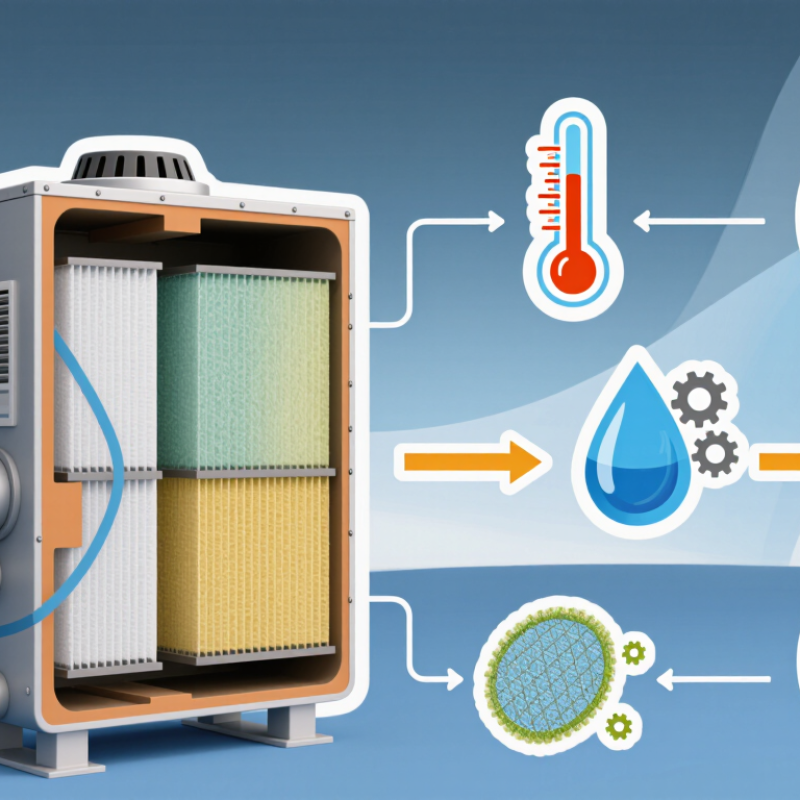
An HVAC filter drier protects the refrigeration circuit from moisture, acids, and solid debris. Moisture can freeze at a metering device and restrict refrigerant flow. It can also react with oil and refrigerant, creating corrosive acids. The filter drier quietly reduces these risks. It is usually installed in the liquid line, where refrigerant enters the expansion device. A small component can prevent expensive compressor damage.
Choosing one requires more than matching the pipe size. Check the refrigerant type, oil compatibility, system capacity, and acceptable pressure drop. Heat pump systems may need a bi-directional model. A moisture indicator can help technicians monitor system conditions, but it is not a substitute for proper evacuation. During installation, experienced technicians often braze with dry nitrogen flowing through the tubing. This helps limit internal oxidation.
In field work, I have seen an oversized drier create unnecessary restrictions. A tiny pressure drop may seem harmless, yet it can increase as the desiccant collects contaminants. After a compressor burnout, a temporary suction-line drier may help remove acidic residue. It should be monitored and replaced when conditions improve. I once trusted a normal sight-glass reading too quickly. That was a mistake. A system can look clear while hidden moisture remains. Measuring vacuum with a micron gauge gives stronger evidence than relying on time alone. Choose a drier that matches the system’s actual duty, not just its connection diameter.
How to Choose the Right HVAC Filter Drier? - Understanding the Role of an HVAC Filter Drier
| Selection Dimension | What to Check | Practical Guidance | Why It Matters |
|---|---|---|---|
| Refrigerant Compatibility | Refrigerant type, oil type, and system operating conditions | Choose a drier specifically approved for the refrigerant and lubricant used in the system. Confirm compatibility with mildly flammable or higher-pressure refrigerants when applicable. | Incompatible materials can reduce drying performance, damage seals, or create safety and reliability problems. |
| System Application | Air-conditioning, heat-pump, refrigeration, or transport refrigeration service | Use a model designed for the system’s temperature range, flow direction, and expected moisture load. Heat-pump systems may require bi-directional protection. | Different applications may require different desiccant blends, flow capacity, and internal construction. |
| Installation Location | Liquid line, suction line, or both flow directions | A standard liquid-line drier is commonly installed downstream of the condenser and before the metering device. Suction-line driers are generally used temporarily after a burnout or major contamination event. | Correct placement improves moisture and contaminant removal while avoiding unnecessary pressure drop. |
| Connection Size and Type | Tube outside diameter, fitting style, and connection orientation | Match the drier connections to the existing tubing or use correctly sized adapters. Follow the specified brazing procedure and protect the drier from excessive heat. | A correct connection supports leak-free installation and prevents flow restrictions or installation damage. |
| Flow Capacity | Manufacturer-rated refrigerant flow and allowable pressure drop | Select a capacity suitable for the system’s cooling or heating load and refrigerant. Do not choose solely by physical size or connection diameter. | An undersized drier can create excessive pressure drop, reduce capacity, and cause abnormal system operation. |
| Moisture Removal | Desiccant type, moisture capacity, and system contamination level | Use a standard moisture-control drier for routine installation. After a compressor burnout or severe contamination, use a cleanup drier approved for that purpose and replace it after the cleanup procedure. | Moisture can react with refrigerant and oil, contributing to corrosion, ice formation, and acid-related compressor damage. |
| Contaminant Filtration | Ability to capture particulate matter, wax, acid, and decomposition products | Choose a high-filtration or cleanup design when the system has experienced component failure, brazing debris, or oil contamination. | Removing contaminants protects expansion devices, valves, bearings, and other sensitive components. |
| Pressure and Temperature Rating | Maximum working pressure, allowable temperature range, and applicable safety requirements | Verify that the rated limits exceed the system’s expected operating and standing pressures, including conditions during shutdown and defrost. | A properly rated component helps maintain mechanical integrity and safe operation. |
| Bi-Directional Operation | Whether refrigerant flow reverses during heating and cooling cycles | For reversible heat pumps, select a drier designed and approved for flow in both directions. A one-way drier may not provide suitable protection. | The internal check-valve arrangement and filtration performance must remain effective during flow reversal. |
| Service and Replacement | Replaceable core, pressure-drop monitoring, and moisture indication | Use a replaceable-core assembly for larger systems or installations requiring ongoing contamination control. Replace a sealed drier after major system opening, compressor failure, or confirmed moisture contamination. | Planned replacement helps preserve drying capacity and prevents a saturated drier from restricting refrigerant flow. |
| Installation Quality | Clean tubing, dry nitrogen during brazing, correct evacuation, and leak testing | Keep the drier sealed until installation, minimize exposure to ambient air, braze with an appropriate inert-gas purge, evacuate the system properly, and verify there are no leaks. | A correctly selected drier cannot compensate for moisture, oxygen, debris, or leaks introduced during installation. |