What Is a CNC Screw Machine and How Does It Work?
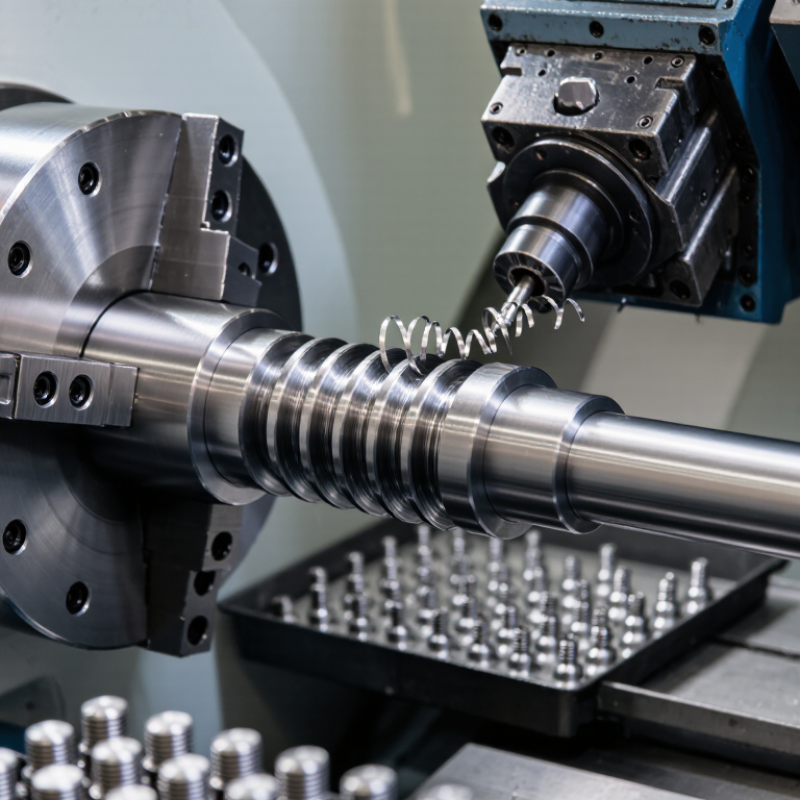
A Cnc Screw Machine turns bar stock into repeatable precision parts through a coordinated sequence of cutting operations. The material feeds through a spindle while programmed tools shape its surface, drill holes, or cut threads. In many machines, several tools work in quick succession, reducing manual handling. Picture a metal bar advancing into the machine as a cutting tool removes thin curls of material. Small parts. Tight tolerances. That is the basic idea, though machine designs and capabilities vary.
CNC educator and machinist John Saunders offers a useful principle, paraphrased here rather than presented as a verbatim quotation: “Good machining depends on controlling the process, not just moving the tool.” That distinction matters. A program must account for tool geometry, material behavior, workholding, and cutting conditions. Even a capable machine can produce poor parts when setup or inspection is overlooked. And a polished surface does not prove every dimension is correct.
This introduction explores what a Cnc Screw Machine is, how its main components work together, and where screw machining fits in modern manufacturing. It also distinguishes common machine configurations and explains the production steps, from bar feeding to finished-part inspection. Examples may include small fittings, pins, and threaded components, where consistent dimensions and efficient production are important. The technology is precise, but not effortless. Understanding its limits is part of using it well.
What Is a CNC Screw Machine?
A CNC screw machine is an automated lathe designed to produce small, turned components from metal or plastic bar stock. Despite its name, it does not cut threads only. It can make pins, bushings, fittings, and other parts with round features. The term “screw machine” comes from the machine’s long history of producing screws and similar components.
A bar is fed through a rotating spindle, while programmed cutting tools shape its surface. Depending on the design, tools may work from several directions, creating features such as grooves, flats, and drilled holes. Some machines use a guide bushing to support slender stock close to the cutting area. Others use different setups. Tool choice and machine configuration depend on the part.
The process is repeatable, but not automatic in every sense. An operator still selects tools, sets cutting parameters, and checks finished parts with measuring instruments. A tiny change in tool wear can affect a narrow diameter. Coolant and chips matter, too. The first setup may need adjustment. That is normal. When the setup is stable, a CNC screw machine can produce many consistent parts with limited manual handling.
Core Components and Their Functions
A CNC screw machine uses a coordinated set of parts to turn bar stock into precise components.
The spindle rotates the material at a controlled speed. A collet or chuck grips the bar and keeps it centered. On sliding-headstock machines, the headstock moves the bar through a guide bushing near the cutting area. This support can reduce vibration when machining long, slender parts. Not every setup uses one.
Tool stations hold turning, drilling, and threading tools. The CNC controller sends programmed movements to the spindle and machine axes, while sensors help monitor position and operating conditions. A bar feeder supplies fresh stock, often allowing repeated production with less manual handling. Coolant carries heat away from the cutting zone, and chip management clears metal fragments that could mark a surface or interrupt a cut. Small details matter.
During a cycle, the machine indexes the required tool, advances or positions the stock, and removes material in controlled passes. Operators still check dimensions, tool wear, and chip formation; automation does not make inspection unnecessary. In practice, setup choices depend on the part’s length, material, and tolerance. I would not treat a tool list as fixed, since the right arrangement can change from job to job. Even a well-tuned process may need adjustment.
How a CNC Screw Machine Works Step by Step
A CNC screw machine turns bar stock into precise, repeatable parts. The process begins when a bar is fed through the spindle and clamped by a collet. On a sliding-headstock machine, a guide bushing supports the bar close to the cutting area. Not every screw machine uses this arrangement.
Next, the CNC program coordinates spindle speed, tool movement, and feed rate. The bar rotates while tools approach in sequence, turning its diameter, drilling a hole, or cutting threads. Coolant carries heat away, and chips are cleared from the work zone. A cutoff tool then separates the finished part. The bar advances, and the cycle repeats.
Operators check sample parts with gauges; a small setup error can affect every piece. Grand View Research estimated the broader global CNC machine market at USD 101.2 billion in 2023. That figure covers many machine types, not screw machines alone.
Tips: Confirm bar diameter, material, and tool offsets before production. Watch the first parts closely. Even a well-tested program may need adjustment when the material or tooling changes.
Materials and Parts It Can Produce
A CNC screw machine turns bar stock into small, precise components. The bar feeds through a spindle while cutting tools shape its exposed end. Common materials include free-machining steel, stainless steel, aluminum, brass, copper, and selected engineering plastics. The right choice depends on strength, corrosion resistance, finish, and chip behavior. IAI’s 2024 statistics report about 70.6 million tonnes of primary aluminum production worldwide in 2023. USGS’s Mineral Commodity Summaries 2024 estimates 2023 copper mine production at roughly 22 million tonnes. These figures describe supply, not machinability. Alloy grade and machine setup still matter. Small parts, repeated.
Typical parts include pins, bushings, spacers, shafts, fittings, and fasteners. A Swiss-type machine can support long, slender parts near the cutting zone, while other screw-machine setups suit different diameters and geometries. Bar capacity, tool access, tolerances, and production volume limit what is practical. A tiny turned groove may be easy; a deep cross-hole can add costly operations. Chips matter, too. Long, stringy chips can interrupt production, even when the drawing looks simple. That distinction is easy to overlook. Part drawings should specify material grade and critical tolerances, not just the overall shape.
CNC Screw Machine Materials: Typical Density
CNC screw machines commonly turn metals and engineering plastics into pins, bushings, fasteners, fittings, and connectors. Density values are typical and may vary by grade and condition; material selection also depends on strength, corrosion resistance, machinability, and the part’s requirements.
Common Applications and Key Advantages
A CNC screw machine is an automated lathe that turns bar stock while cutting tools shape it into precise components. Many models feed material through a collet, then perform turning, drilling, or threading in programmed sequences. Tool stations can complete several features without moving the part between separate machines. Small parts. High volume.
Common applications include automotive fittings, electrical connector pins, plumbing components, and small fasteners. These parts often need consistent diameters, clean threads, and repeatable lengths. CNC control helps maintain those dimensions across long production runs, while bar feeding reduces manual loading. It can also lower handling time, though results depend on tooling, setup, and material quality.
Grand View Research valued the global CNC machine market at $101.22 billion in 2023 and projected 6.3% annual growth from 2024 to 2030. This report covers CNC machines broadly, not screw machines alone. The distinction matters. On the shop floor, a worn cutting edge or poorly chosen feed rate can still create scrap, so automation does not replace inspection. Operators check sample parts with micrometers and thread gauges, then adjust offsets when measurements drift. A fast cycle is useful, but stable quality takes attention.