Garage Openers - PFC CONTROLS | Miami, Gate Operators, Sliding Gate, Swing Gate, Intercoms, Turnstiles, Bollards, Barrier gate

MENU
Go to content

What Is PU Insulation Foam System and How Does It Work?

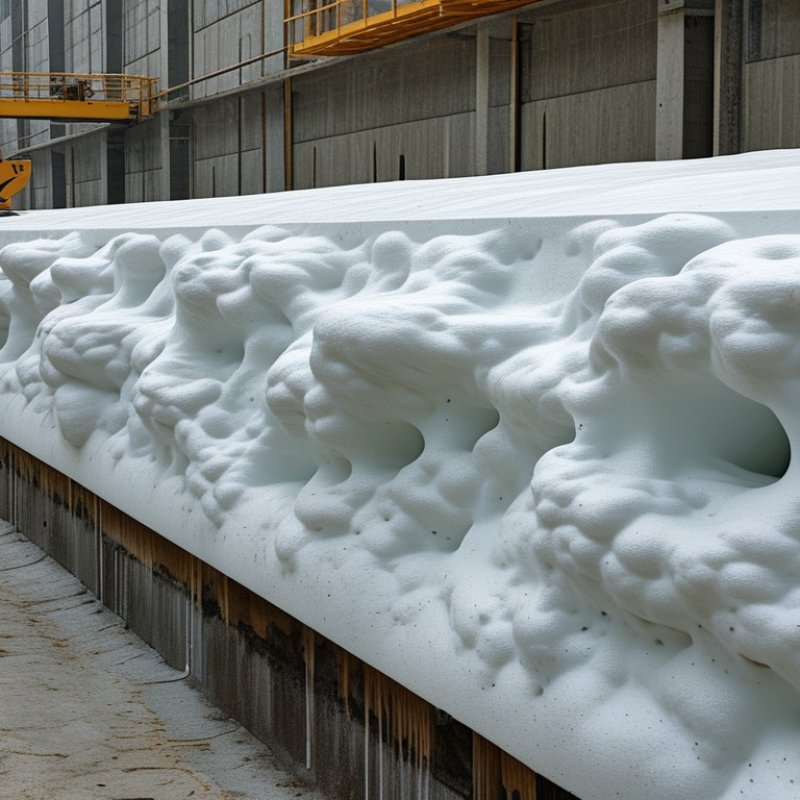
A Pu Insulation Foam System combines chemical knowledge, controlled application, and careful building design. It usually uses two liquid components, commonly called A-side and B-side materials. When mixed at the spray gun, they react quickly. The liquid expands into foam, filling gaps around walls, roofs, floors, pipes, and irregular joints. This reaction creates an insulating layer with air-sealing properties.

“A building is a system,” explains building-science expert Dr. Joseph Lstiburek. His point is important here. Pu Insulation Foam System should never be judged by expansion alone. The substrate, climate, ventilation, thickness, and installation temperature all affect its performance. A warm, dry wall may accept the foam well. A damp surface may create adhesion problems. Small details matter.

The foam’s closed or open cellular structure influences thermal resistance, moisture movement, sound control, and flexibility. Closed-cell foam generally provides higher resistance per inch and stronger moisture control. Open-cell foam usually expands more and remains softer. Neither option is automatically best. The building’s purpose decides.

Professional installers check surface conditions, proportioning equipment, curing behavior, and final coverage. They also follow product documentation and local fire-safety requirements. The wrong mixture can leave brittle foam, soft areas, or persistent odors. That is not a minor defect.

This technology is effective, but it is not a magic blanket. It cannot repair poor drainage or replace sound building design. A reliable system needs qualified assessment, accurate application, and realistic expectations. Even experienced teams should inspect their work and question assumptions. That is where durable insulation performance begins.
What Is PU Insulation Foam System and How Does It Work?

What Is a PU Insulation Foam System?

A PU insulation foam system is a coordinated set of materials and equipment that creates polyurethane foam on site. It normally combines a polyol blend with an isocyanate component. When these liquids meet, they react, expand, and form a cellular plastic layer. The system also includes pumps, heated hoses, spray equipment, and temperature controls. Technicians adjust pressure and mixing ratios for each surface.

PU foam is available in open-cell and closed-cell forms. Open-cell foam is lighter and more flexible, while closed-cell foam offers higher resistance to moisture and heat transfer. The U.S. Department of Energy reports that air leakage can account for 25% to 40% of heating and cooling energy use in many homes. A continuous foam layer can reduce these unwanted air paths, especially around joints, pipes, and irregular wall surfaces. Still, foam cannot correct every building defect.

The International Energy Agency reported that buildings and construction represented about 30% of global energy demand in 2022. This places insulation systems within a larger energy-efficiency strategy. However, performance depends on substrate preparation, installation thickness, curing conditions, and ventilation during application. Small errors matter. A poor mix may create weak or uneven foam. In practice, site conditions are messier than technical brochures suggest. Installers should verify density, adhesion, and coverage instead of trusting appearance alone. Industry guidance from the Spray Polyurethane Foam Alliance also emphasizes trained application and documented quality checks.

What Materials and Components Make Up a PU Foam System?

PU insulation foam is a reactive system, not a single material. Its core ingredients are a polyol blend and an isocyanate. When mixed, they form polyurethane through a controlled chemical reaction. The polyol side usually contains polyols, catalysts, silicone-based surfactants, flame retardants, and blowing agents. The isocyanate provides reactive groups that create the polymer network. Blowing agents generate the closed-cell structure, while surfactants keep those cells small and evenly distributed. Small formulation changes matter.

Equipment is also part of the system. Metering pumps must deliver both liquid components at a stable ratio. Mixers, heated hoses, spray guns, molds, and temperature controls influence foam density and adhesion. The U.S. Department of Energy commonly reports rigid polyurethane foam at approximately R-6 per inch, although real performance depends on aging, joints, moisture, and installation quality. Thermal conductivity can rise as cells lose their original blowing gas. This detail is often overlooked.

The UNEP 2023 Global Status Report for Buildings and Construction states that buildings and construction account for about 37% of global energy-related emissions. Better insulation can reduce heating and cooling demand, but foam alone cannot fix poor detailing. In field work, gaps around pipes or uneven spraying can reduce performance sharply. That is the uncomfortable part. Laboratory values are not guarantees. Material selection should therefore consider density, cell structure, fire performance, vapor control, and compatibility with the substrate, using measured data from the specific system.

How Does PU Foam Form and Expand?

PU insulation foam forms when two liquid components meet: a polyol blend and an isocyanate. Their reaction releases heat and creates polyurethane polymers. At the same time, water reacts with isocyanate and generates carbon dioxide gas. Physical blowing agents may also vaporize inside the mixture. These gases create tiny bubbles before the polymer skin hardens.

Expansion happens quickly. The liquid mixture can rise several dozen times above its original volume, depending on temperature, formulation, and mixing accuracy. Open-cell foam retains connected bubbles and feels softer. Closed-cell foam traps gas inside rigid cells, creating stronger moisture resistance. U.S. Department of Energy Building America guidance reports approximate insulation values of R-3.5 to R-4 per inch for open-cell foam and R-6 to R-7 per inch for closed-cell foam. The numbers vary in real installations.

Timing matters. A cold substrate can slow curing and reduce expansion. Excess moisture may also disturb cell structure. I have seen foam appear full on the surface while remaining soft underneath; appearance alone proves little. The 2023 Global Status Report for Buildings and Construction identifies buildings as responsible for about 34% of global energy demand, making effective insulation valuable. Yet higher expansion is not automatically better. Uniform cells, stable density, and careful installation usually matter more than dramatic volume growth.

What Is PU Insulation Foam System and How Does It Work? - How Does PU Foam Form and Expand?

Data Dimension Typical Information How It Affects Foam Formation or Performance
Material name Polyurethane (PU) insulation foam A cellular plastic insulation material formed by reacting an isocyanate component with a polyol-based component.
Main system components Isocyanate component and polyol formulation The polyol formulation may also contain catalysts, surfactants, flame retardants, water, and/or physical blowing agents.
Primary chemical reaction Isocyanate groups react with hydroxyl groups to form urethane linkages This polymerization builds the solid polyurethane network around the developing gas cells.
Chemical blowing mechanism Water reacts with excess isocyanate and generates carbon dioxide (CO₂) The CO₂ forms bubbles in the reacting polymer and contributes to foam expansion.
Physical blowing mechanism A low-boiling blowing agent may vaporize from reaction heat Vapor formation enlarges the cells; the selected agent affects thermal performance, density, and environmental properties.
Reaction character Exothermic Heat released during reaction helps accelerate curing and can promote vaporization of a physical blowing agent.
Expansion sequence Mixing → nucleation → cell growth → rise → curing Gas bubbles first form, then expand until the polymer network becomes sufficiently rigid to hold the cellular structure.
Typical free-rise volume increase Often approximately 20–40 times the liquid mixture volume, depending on formulation and process Actual expansion varies with density target, temperature, moisture, mixing quality, and whether the foam is molded, poured, or sprayed.
Typical rigid foam density Approximately 30–60 kg/m³ for many insulation applications Lower density generally uses more gas volume, while higher density generally provides greater mechanical strength; the exact range depends on product design.
Cell structure Predominantly closed-cell or open-cell, depending on formulation Closed cells usually improve moisture resistance and dimensional stability, while open cells are lighter and more vapor-permeable.
Thermal conductivity Common initial design range: approximately 0.020–0.030 W/(m·K) for rigid PU foam The value depends on density, cell gas, cell size, temperature, aging, and moisture content.
Temperature influence Raw-material and substrate temperatures must be controlled Low temperatures can slow reaction and reduce expansion; excessive temperatures can shorten working time and cause irregular cells.
Moisture influence Moisture participates in the blowing reaction Too much moisture can increase CO₂ generation, alter density, create voids, and affect adhesion or dimensional stability.
Catalyst function Controls the rates of polymerization and blowing reactions The catalyst balance influences cream time, rise time, tack-free time, cell structure, and final cure.
Surfactant function Stabilizes cell walls and helps regulate cell size Proper surfactant selection helps prevent cell coalescence and supports a more uniform foam structure.
Mixing ratio Specified by the formulation; commonly controlled near the designed equivalent ratio An incorrect ratio can cause poor curing, excessive brittleness, softness, odor, dimensional change, or reduced insulation performance.
Application methods Spray, pour-in-place, panel, block, and molded foam processes The process determines how the foam is mixed, confined, expanded, cured, and bonded to adjacent surfaces.
Curing endpoint The foam becomes dimensionally stable and develops its intended mechanical properties Full performance may continue to develop after the foam appears firm, depending on formulation and ambient conditions.
Key insulation benefits Low thermal conductivity, low weight, continuous coverage, and gap-filling capability Correctly selected and installed PU foam can reduce heat transfer and limit air leakage through joints and irregular surfaces.

Note: Values are typical reference ranges for insulation-grade PU foam systems. Actual results depend on formulation, equipment, environmental conditions, and application method.

How Is PU Insulation Foam Applied and Cured?

Polyurethane insulation foam is created by mixing two liquid components at the spray gun. The reaction expands rapidly and releases heat. It bonds to wood, concrete, and metal when the surface is clean and dry. The application temperature matters. Poor conditions can cause shrinkage, weak adhesion, or uneven cells.

Professional installers usually test the substrate before spraying. Surface moisture, ambient temperature, and ventilation should be recorded. Industry guidance from the Spray Polyurethane Foam Alliance recommends controlling lift thickness and spray conditions during installation. A typical pass may be about 25 to 50 millimeters, depending on the formulation and project specification. Thicker lifts can trap heat. That risk is easy to underestimate. The foam should be applied in several controlled passes, with cooling time between them.

Curing begins immediately, but full stabilization takes longer. The surface may become tack-free within minutes, while deeper sections can require many hours. The exact time depends on density, humidity, temperature, and layer thickness. Installers should follow the product’s technical data and relevant ASTM requirements, including ASTM C1029 for spray-applied rigid cellular polyurethane insulation. UNEP’s 2023 Global Status Report for Buildings and Construction reported that buildings consumed about 34% of global energy in 2022. Properly cured foam can reduce unwanted air movement, but poor installation weakens that benefit. A finished surface can look smooth and still contain hidden voids. Inspection remains necessary.

What Are the Main Uses and Performance Benefits of PU Foam?

PU insulation foam systemscombine Polyol And Isocyanate components, creating foam through a controlled chemical reaction. The mixture expands, adheres to surfaces, and forms either open-cell or closed-cell insulation. Installers use these systems in wall cavities, roofs, floors, refrigerated rooms, doors, and insulated pipes.

Performance depends strongly on foam structure. The U.S. Department of Energy’s Building America guidance reports approximate R-values of 3.5–4 per inch for open-cell spray foam and 6–7 per inch for closed-cell foam. Higher resistance can reduce heat transfer where space is limited. Closed-cell foam also limits air movement and water vapor more effectively. Useful in damp areas.

Buildings consume about 30% of global final energy, according to the International Energy Agency’s Buildings 2023 analysis. Better insulation can therefore support lower heating and cooling demand, especially around joints and irregular surfaces. PU foam also reduces air leakage when applied continuously. However, performance figures are not automatic. Poor mixing, wet substrates, thin application, or damaged surfaces can reduce the expected result. A perfect laboratory value may fail on a cold, dusty jobsite. Designers should check thermal conductivity, aging, fire classification, moisture exposure, and installation quality. The ASHRAE Handbook—Fundamentals emphasizes that real insulation performance varies with temperature, density, and workmanship. In practice, small gaps can matter more than impressive product data.

PFC CONTROLS
1638 NW 108TH AVE. MIAMI, FL 33172
Sales: (305) 593-0227
Tech: (305) 546-3965

Copyright, All rights reserved
Back to content