Garage Openers - PFC CONTROLS | Miami, Gate Operators, Sliding Gate, Swing Gate, Intercoms, Turnstiles, Bollards, Barrier gate

MENU
Go to content

7 Tips for Choosing the Best SMA Antenna

Choosing the right SMA Antenna is not just a matter of finding a connector that fits. The antenna must also suit your radio’s frequency, impedance, installation space, and operating environment. John D. Kraus, a respected antenna engineer, described an antenna as “a structure associated with the region of transition between a guided wave and a free-space wave.” That principle matters in practice: a neat mechanical fit cannot compensate for poor electrical compatibility.

Small details change performance. A 2.4 GHz antenna may be unsuitable for a 5.8 GHz system, while a long cable can introduce signal loss before the antenna even comes into play. Check the connector type, frequency range, 50-ohm impedance, gain, and VSWR against your device’s documentation. Also consider the mounting surface, nearby metal, and whether the antenna will face vibration, moisture, or frequent handling. Specifications help, but they do not tell the whole story. A datasheet can still leave room for questions.

The seven tips in this guide offer a practical way to compare options without treating one specification as a guarantee. Look at how the antenna will actually be used, then weigh performance against size, durability, and cost. A small compromise may be sensible. Guessing is not. When requirements are unclear, confirm them with the equipment manufacturer or a qualified RF professional before ordering.
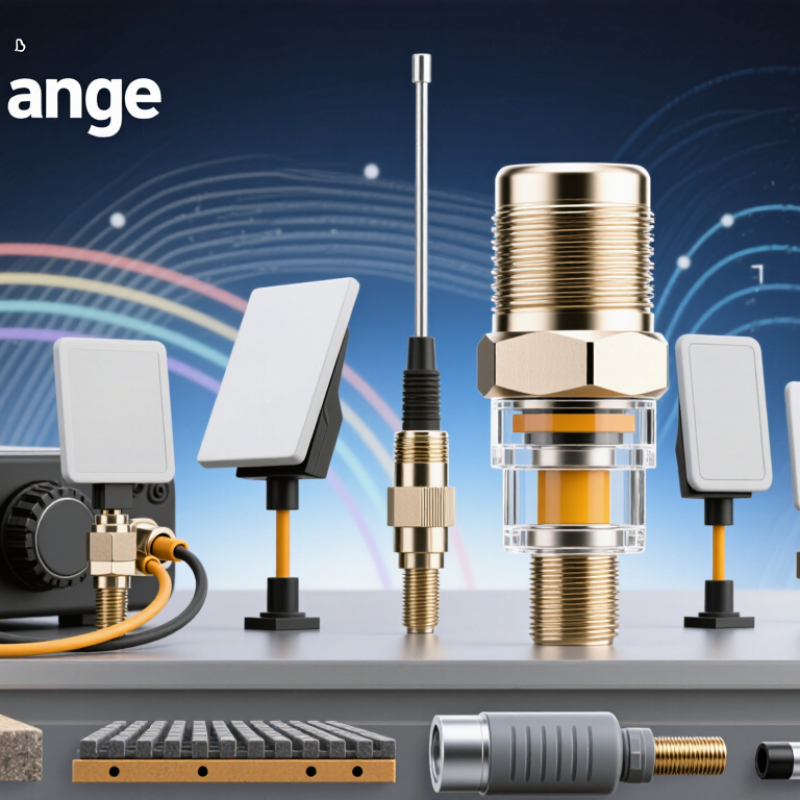
7 Tips for Choosing the Best SMA Antenna

Understand SMA Antenna Types and Connector Basics

7 Tips for Choosing the Best SMA Antenna

Understand SMA Antenna Types and Connector Basics

Choosing an SMA antenna starts with separating antenna design from connector style. SMA describes a threaded coaxial connector, not a radiation pattern. An omnidirectional antenna suits coverage around a device, while a directional model concentrates reception or transmission toward one area. Check the required frequency range and 50-ohm system before comparing shapes. Small details matter.

Tip: Confirm whether your equipment uses standard SMA or RP-SMA. Their threads may look alike, but the center pin and socket arrangement differs. Match the connector to the device port, and never force a connection. A snug fit is enough; excessive tightening can damage the interface.

Next, inspect the antenna’s stated frequency bands and mounting needs. A compact whip may suit a handheld unit, while a panel antenna may work better in a fixed position. Keep metal surfaces and cables in mind; nearby objects can affect performance. I once overlooked a connector adapter during a setup check, and the extra joint added an avoidable weak point. Verify the connector gender, cable length, and antenna clearance against your actual equipment, not just a product photo.

Define the Required Frequency Range and Application

Before choosing an SMA antenna, identify the frequencies your device must transmit or receive. The SMA connector describes the interface, not the antenna’s operating range. Check the radio’s specified bands and compare them with the antenna’s stated frequency range. A broad range may seem convenient, but performance can vary across it.

Match the antenna to its actual job. A compact sensor sending small data packets nearby has different needs from equipment maintaining a longer link through walls. Consider the installation too: a metal enclosure, nearby cables, and the host device’s ground plane can affect performance. Fit and orientation matter.

I have seen frequency range get plenty of attention while mounting position gets overlooked; that is an easy mistake to repeat. Review the datasheet for gain and radiation-pattern details, then test the complete device in its intended setting. Bench results alone may not reflect a crowded room or a tightly enclosed product. If the application spans several bands, confirm that the antenna supports each one, rather than assuming its listed range guarantees equal results everywhere.

Match Impedance, Gain, and Radiation Pattern

An SMA connector describes the interface, not whether an antenna suits your radio. Check the equipment’s specified impedance, often 50 ohms, and confirm the antenna’s operating band before buying. An impedance mismatch can reflect power, reduce effective range, and make readings less consistent. Small details matter.

Gain is useful only when it supports the coverage you need. A higher-gain antenna often concentrates energy into a narrower pattern, rather than improving reception in every direction. For a sensor moving around a room, broad coverage may work better than a high-gain model aimed down one hallway. Consider antenna height, nearby metal, and the ground plane; each can reshape the real radiation pattern.

Compare radiation-pattern plots at your operating frequency, not just one peak-gain number. Check cable loss, clearance, and connector orientation in the actual installation. If possible, measure return loss or VSWR after mounting with suitable test equipment. Test it in place. Even a careful setup can surprise you: walls and cables complicate neat predictions, and datasheet figures may not reflect the antenna’s performance in your space.

Check Connector Compatibility and Mounting Needs

7 Tips for Choosing the Best SMA Antenna
Check Connector Compatibility and Mounting Needs

Tip: Match the connector before comparing antenna gain. SMA and reverse-polarity SMA can look nearly identical, yet their center contacts differ. Check the equipment socket’s gender and contact type, then verify the antenna’s connector drawing. The IEC 61169-15:2021 interface specification identifies SMA as a 50-ohm connector; that number should match the radio and coaxial cable. A connector that screws on is not necessarily electrically compatible. Small mismatch, big trouble.

Tip: Inspect the mounting point with the same care. Measure panel thickness, hole diameter, available clearance, and cable bend space. A bulkhead mount may need a washer and nut behind the panel; a magnetic base needs a clean, flat metal surface. Avoid forcing the coax into a sharp turn beside the connector. That is an easy detail to miss.

Tip: Confirm the full RF path, not just the antenna label. Check the cable’s impedance, frequency range, and connector ends against the radio’s specifications. IEC 61169-15 describes the connector interface, but it does not guarantee that every SMA assembly performs equally at every frequency. If the installation is outdoors, check whether the mounting hardware and cable entry are protected from moisture. Recheck the fit after installation; a neat-looking mount can still leave strain on the connector. I would measure twice, even when the parts appear standard.

7 Tips for Choosing the Best SMA Antenna - Check Connector Compatibility and Mounting Needs
Tip Selection Factor What to Check Practical Guidance
1 Frequency band Confirm that the antenna’s specified operating range covers the frequencies used by your radio. For example, a 2.4 GHz device needs an antenna designed for that band. A multiband radio may need an antenna that explicitly covers each required band.
2 SMA connector compatibility Check both the thread style and the center contact. Standard SMA and reverse-polarity SMA (RP-SMA) are different interfaces. Compare the antenna connector with the device or cable connector before ordering. Do not rely on thread fit alone; verify pin and socket configuration too.
3 Impedance and RF path Many radio systems and SMA antennas use a nominal 50-ohm impedance. Also account for any adapters or extension cable. Use components specified for the system’s impedance. Extra cable and adapters can add signal loss, especially as frequency and cable length increase.
4 Mounting method Choose a mounting style suited to the enclosure and installation: direct connector mount, bulkhead mount, magnetic base, or another specified mounting option. Check panel thickness, available clearance, hole size, cable routing, and whether the antenna must be removable. A magnetic base requires a suitable metal surface to hold securely.
5 Gain and coverage pattern Compare gain in dBi and review the radiation pattern, not just the gain number. Higher gain can concentrate coverage more strongly in certain directions. Choose an antenna pattern that suits the device orientation and the locations of other radios.
6 Installation environment For outdoor or exposed installations, check the stated environmental protection, temperature range, and sealing requirements. A connector by itself does not guarantee a weatherproof assembly. Verify that the antenna, cable entry, and panel connection are protected as required.
7 Ground plane and clearance Check whether the antenna is designed to operate with a ground plane and note its recommended spacing from metal, cables, and other objects. Nearby conductive surfaces can affect antenna performance. Follow the installation guidance and test the antenna in its intended position when possible.

Compare Build Quality, Environment, and Certifications

Build quality starts with the details you can inspect. Check whether the SMA connector feels secure and threads smoothly without wobbling. Look for a firm cable strain relief, even seams, and a housing that does not flex under light pressure. A polished finish can be misleading; appearance alone is a weak quality test. For equipment used often, ask for connector durability data and follow the specified mating torque.

The environment changes what “best” means. An antenna beside a sunlit window may need UV-resistant materials, while one on a vehicle may face vibration, rain, and temperature swings. Check the complete assembly, including its cable and connector, rather than assuming the antenna itself is sealed. An IP rating can clarify protection against dust and water, but only under its stated test conditions. Small details matter.

Certifications and test reports help compare products, but read what they actually cover. A safety or quality-system certificate does not automatically confirm antenna gain, frequency range, or outdoor durability. Look for measurement conditions, operating bands, and environmental test results in the datasheet. If those details are missing, ask the supplier for documentation before choosing. That extra check may feel tedious, but it can prevent a poor fit later.

7 Tips for Choosing the Best SMA Antenna

Compare frequency compatibility, build quality, operating environment, and applicable certifications. This chart shows the approximate free-space wavelength at representative wireless frequencies—a useful reference when checking antenna size and band compatibility.

Wavelengths are calculated from the speed of light and rounded to one decimal place. Actual antenna dimensions vary with antenna design and tuning. Before buying, confirm the antenna’s specified frequency range, SMA connector type and polarity, environmental rating, and relevant test or certification documentation. Wireless band availability varies by region.

Article Source:

PFC CONTROLS
1638 NW 108TH AVE. MIAMI, FL 33172
Sales: (305) 593-0227
Tech: (305) 546-3965

Copyright, All rights reserved
Back to content