Garage Openers - PFC CONTROLS | Miami, Gate Operators, Sliding Gate, Swing Gate, Intercoms, Turnstiles, Bollards, Barrier gate

MENU
Go to content

Top Forged Round Rings Suppliers for Global Buyers

Forged Round Rings are chosen for applications where grain flow, fatigue resistance, and dependable dimensions matter. Buyers often compare more than quoted price. They examine alloy traceability, heat-treatment records, ultrasonic testing, machining allowance, and delivery capacity. A ring may look sound on the shop floor. The records behind it matter, too.

The World Steel Association’s October 2024 Short Range Outlook projected global steel demand at about 1.75 billion tonnes for 2024. That figure describes steel demand, not forged-ring sales. Still, it offers useful context: suppliers operate within a large, changing materials market. For global buyers, supplier selection therefore calls for evidence, not broad claims. Ask for material certificates, inspection procedures, and examples of comparable work. Check whether promised tolerances match the intended machining plan.

This guide compares suppliers through practical questions: Can they document the billet’s origin? Do their inspection reports identify test locations and acceptance criteria? Can they explain how ring size, alloy, and heat treatment affect lead time? Small gaps count. A missing record can delay approval; a vague delivery estimate can disrupt production. No verified direct quotation from a named Forged Round Rings specialist was supplied for this introduction, so I will not invent one. That is a limitation worth stating. The sections ahead focus on verifiable supplier capabilities and the details buyers can confirm before placing an order.
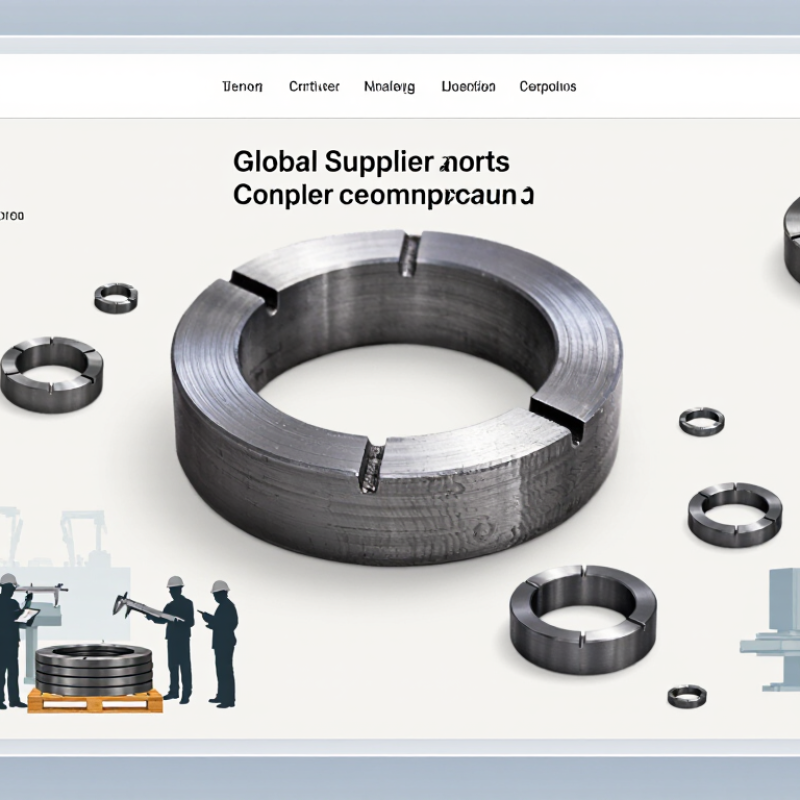
Top Forged Round Rings Suppliers for Global Buyers

Understanding Forged Round Rings and Their Industrial Uses

Forged round rings are seamless, circular components formed by heating and shaping metal under pressure. The process compresses the material and can align its grain flow around the ring. Unlike a welded ring, it has no joining seam to inspect. This makes forged rings useful where strength, fatigue resistance, and reliable geometry matter.

In service, they appear in bearing housings, flanges, pressure equipment, and large rotating assemblies. A ring may arrive as a rough forging, with machining allowance left on its inner and outer surfaces. Buyers should match the alloy, dimensions, heat treatment, and inspection plan to the actual operating conditions. Details matter. Material certificates and dimensional reports help confirm what was supplied, though paperwork cannot replace competent inspection. Not every ring fits.

Supplier discussions should cover forging method, grain direction, tolerances, and available testing, such as ultrasonic examination when appropriate. Ask how the supplier controls heating and cooling; inconsistent treatment can affect hardness and toughness. Still, drawings sometimes omit service loads or temperature ranges, and that gap can lead to a poor specification. Sharing those details early helps engineers assess whether a proposed ring is suitable, rather than relying on size alone.

Typical Densities of Materials Used for Forged Round Rings

Material choice depends on the ring’s service conditions, including strength, temperature, corrosion resistance, and weight. Values shown are typical approximate densities; actual values vary by alloy and specification.

Materials, Manufacturing Methods, and Quality Standards

Forged round rings depend on more than nominal alloy grade. Carbon steel suits many general-duty applications, while alloy and stainless steels can improve strength, toughness, or corrosion resistance. The World Steel Association reported 1,882.6 million tonnes of global crude steel production in 2024. That figure describes industry scale, not ring quality. Buyers should check the mill certificate, heat number, chemistry, and heat-treatment records for each lot.

Manufacturing choices matter. Open-die forging can produce large rings with flexible dimensions; seamless rolled-ring forging can provide consistent circumferential grain flow. Ask suppliers how they control forging reduction, temperature, and cooling. ASTM A668/A668M covers carbon and alloy steel forgings for general industrial use; the purchase specification should also define mechanical tests and inspection requirements. Ultrasonic examination can reveal internal discontinuities, but acceptance criteria need agreement before production. A polished surface alone proves little.

Tips: Request traceable material records, tensile-test results, and a clear ultrasonic inspection report. Confirm dimensions at several points around the ring, not just one spot. Small gaps in documentation happen; resolve them before shipment.

Types of Forged Ring Suppliers in the Global Market

Global buyers typically encounter four types of forged ring suppliers. Integrated steelmakers and forges control more of the route from billet chemistry to finished ring, which can help with traceability and repeat orders. Specialist ring-rolling mills focus on seamless rings, offering closer control over diameter, wall thickness, and grain flow. They are often a practical fit for large or non-standard dimensions. Custom forging shops handle drawing-led projects and smaller batches, though their heat-treatment and inspection capacity should be checked. Distributors and service centers can supply standard sizes quickly, but buyers should confirm material certificates and machining allowance.

The scale of the upstream industry matters. World Steel Association’s World Steel in Figures 2025 reports about 1.88 billion tonnes of crude steel production in 2024. That figure covers all steelmaking, not forged rings; it signals raw-material scale, not ring availability. A supplier’s actual capacity still depends on press or rolling-mill limits, furnace size, and inspection equipment. Ask for recent dimensional inspection records, ultrasonic test procedures, and heat-treatment charts. Paperwork alone is not proof.

Supplier categories can overlap. A ring roller may outsource heat treatment, while an integrated forge may subcontract final machining. That is easy to miss. Ask who performs each process, where it occurs, and which records follow the ring. Then compare lead time, minimum order quantity, and sample inspection scope against the drawing—not just the quoted price.

How to Evaluate Suppliers for Quality and Production Capability

When evaluating forged round ring suppliers, request material certificates that identify the grade, heat number, and test results. Check that the numbers match across certificates, inspection records, and marked stock. For critical applications, ask how the supplier verifies internal soundness, such as through ultrasonic testing where appropriate. Small details matter.

Production capability is more than the size of a press. Review the available forging, heat-treatment, and machining processes, then ask how each stage is controlled. A sample helps. But one acceptable sample does not prove consistent output. Ask for inspection records from several production runs, including dimensional checks and mechanical test results. Confirm the supplier can explain its tolerance limits and what happens when a part falls outside them.

Request realistic capacity and lead-time figures for your ring dimensions and order volume. During a facility review, look for clear identification of work in progress and separation of accepted and rejected parts. Listen for specific answers about process changes, delays, and corrective actions. A polished audit report is useful, but it can hide gaps in daily practice. I would not rely on paperwork alone; some checks are harder to assess remotely. Ask direct questions, and note where evidence remains incomplete.

Top Forged Round Rings Suppliers for Global Buyers - How to Evaluate Suppliers for Quality and Production Capability

Evaluation Area What to Verify Useful Evidence Buyer Checkpoint
Material traceability Whether each ring can be traced to its material heat, grade, and applicable purchase requirements. Material test report, heat number records, and traceability procedure. Confirm identifiers remain linked through forging, heat treatment, inspection, and shipment.
Forging process capability Experience with the required ring dimensions, material, forging route, and production volume. Process flow, equipment range, sample production records, and capacity plan. Check that stated equipment capacity covers the drawing dimensions and required schedule.
Dimensional control Control of inside and outside diameters, height, machining allowance, and geometric tolerances. Inspection plan, calibrated instrument list, and sample dimensional report. Agree inspection points and acceptance limits against the approved drawing before production.
Heat treatment Whether the specified heat-treatment cycle and required properties can be achieved and documented. Furnace records, temperature charts, batch identification, and test results where required. Verify process and property requirements against the material specification and purchase order.
Mechanical testing Availability of testing for the specified tensile properties, hardness, or other required characteristics. Test reports identifying the material, batch, test method, and results. Specify test frequency, sampling location, and acceptance criteria in the order.
Surface and internal examination Inspection methods suited to the product and stated acceptance requirements, including any specified nondestructive testing. Inspection procedures, personnel qualifications where applicable, and reports for the ordered scope. Define the method, coverage, acceptance level, and reporting requirements before manufacture.
Quality management Documented controls for nonconforming products, corrective actions, inspection records, and process changes. Current quality-system certificate, audit scope, and relevant quality procedures. Check certificate validity and scope; certification alone does not establish product conformity.
Standards and documentation Ability to meet the standards and documentation requirements stated in the order. Quality plan, material certificates, inspection reports, and any required conformity documents. Identify the applicable standard and edition in the contract; requirements vary by material and application.
Production planning and delivery Realistic lead time, production scheduling, subcontractor controls, and ability to communicate delays. Order schedule, capacity allocation, milestone plan, and shipment documentation process. Confirm the delivery basis, inspection hold points, packaging, and export-document requirements.
Sample approval and communication Willingness to review technical requirements, resolve drawing questions, and submit samples or first-article results when required. Technical review records, approved drawings, sample reports, and named quality contacts. Document revisions and approvals before release; assess responsiveness during the quotation stage.

Evaluation note: Match every acceptance criterion to the application, drawing, material specification, and purchase order. Request evidence for the specific production route and order rather than relying on general capability statements.

Comparing Pricing, Logistics, and Export Support for Global Buyers

When comparing forged round ring suppliers, request prices against one identical specification. Include alloy grade, outside and inside diameters, height, heat treatment, machining allowance, inspection level, and packaging. A low unit price can hide extra testing, tooling, or oversized-freight charges. Ask for a line-item quotation and a sample inspection record. Small details matter. One weakness in many comparisons is treating “forged” as a complete quality description; it is not.

Logistics can change the real landed cost. UNCTAD’s Review of Maritime Transport 2024 notes that shipping carries over 80% of world trade by volume, so port capacity and transit disruption deserve attention. Compare the supplier’s named loading port, production lead time, shipment terms, packing method, and ability to share tracking updates. The World Bank’s 2023 Logistics Performance Index assessed 139 economies across customs, infrastructure, shipment arrangements, and other dimensions; these factors help explain why similar routes can have different delivery reliability. For export support, ask who prepares commercial invoices, packing lists, material certificates, and inspection records. Confirm document formats before production. Delays cost money. A practical comparison should include both a standard route and a disruption scenario, though estimates can still miss real-world congestion.

PFC CONTROLS
1638 NW 108TH AVE. MIAMI, FL 33172
Sales: (305) 593-0227
Tech: (305) 546-3965

Copyright, All rights reserved
Back to content