Garage Openers - PFC CONTROLS | Miami, Gate Operators, Sliding Gate, Swing Gate, Intercoms, Turnstiles, Bollards, Barrier gate

MENU
Go to content

Who Are the Top Silicone Hose Manufacturers in 2026?

Silicone hoses work quietly behind demanding systems: beneath an engine cover, beside a hot process line, or inside food-production equipment. Their flexibility is visible; their limits are less so. A hose can look robust and still fail when temperature, pressure, fluid compatibility, or reinforcement are poorly matched. Small details matter.

Grand View Research’s Silicone Market Size, Share & Trends Analysis Report estimated the broader global silicone market at about US$18.5 billion in 2023, with projected growth through 2030. That figure covers silicone applications beyond hoses, so it should not be mistaken for a hose-market estimate. Still, it signals expanding demand for silicone materials across industries. When comparing a silicone hose manufacturer, buyers should look beyond catalog breadth and assess documented temperature and pressure ratings, material specifications, testing practices, and batch traceability. Ask how the hose performs under repeated heat cycles, not only under ideal conditions. A polished product page is not proof. No directory gets everything right. This guide compares leading manufacturers using available product information, technical documentation, and application fit. It is a starting point, not a substitute for engineering review. Verify the details. A careful comparison can help narrow the field, but the right choice depends on the actual system, operating conditions, and required service life.
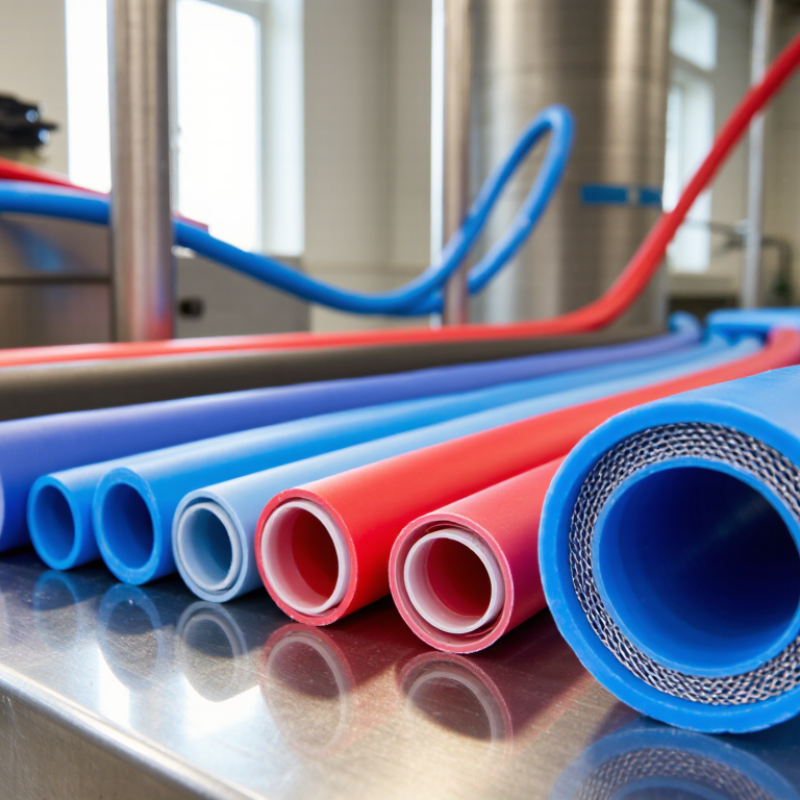
Who Are the Top Silicone Hose Manufacturers in 2026?

Silicone Hose Fundamentals: Typical −60 to 200°C and 30–80 Shore A

Silicone hose specifications commonly quote −60 to 200°C and 30–80 Shore A. Treat these as typical selection ranges, not universal guarantees. Continuous temperature limits depend on the compound, exposure time, pressure, and fluid. A hose carrying hot air may behave differently from one exposed to oil or repeated thermal cycling. Real systems are less tidy. Check the supplier’s test conditions and application data before specifying a hose.

Shore A describes indentation hardness, not flexibility by itself. A 30 Shore A wall may feel soft in the hand, while an 80 Shore A wall resists indentation more strongly. Reinforcement and wall thickness also affect how a hose bends. ASTM D2240 provides the durometer test method; specimen thickness and measurement conditions matter. ISO 188 covers accelerated heat ageing, while ISO 1817 addresses rubber’s effects from liquids. These standards help frame testing, but they do not certify every hose for the full temperature range. That distinction matters. A datasheet number can look precise and still need checking against the actual pressure, fluid, and duty cycle.

Key Standards: SAE J20, ISO 9001, and IATF 16949

When comparing silicone hose manufacturers in 2026, treatSAE J20, ISO 9001, and IATF 16949 as different kinds of evidence. SAE J20 addresses automotive coolant-system hose performance; it is not a general approval for every silicone hose or application. Ask for the exact standard revision, hose classification, temperature range, and test results. Check the details. A polished certificate cannot replace a sample tested under relevant conditions.

ISO’s 2023 Survey reported more than one million valid ISO 9001 certificates worldwide. That scale makes the certificate a useful quality-system signal, but not proof that a particular hose will last. Review inspection records, material traceability, and how the factory handles nonconforming batches. For a practical check, match the sample’s markings and dimensions against its drawing, then request documented pressure, vacuum, and heat-aging results where applicable.

IATF 16949 is an automotive quality-management standard, not a product-performance certificate. Its process focus can matter when hoses enter vehicle supply chains, where change control and defect tracking are important. Confirm that the certified site and scope cover the actual production operation. Then compare lot-level data and test methods, not just supplier claims. One weakness: public certificates rarely show how consistently a factory controls silicone formulation between batches. That deserves a closer question.

How to Compare Manufacturers: Pressure, Burst, and Impulse-Test Data

When comparing silicone hose manufacturers in 2026, ask for test conditions, not just headline ratings. A pressure figure means little without hose diameter, temperature, fluid, and reinforcement details. Confirm that the stated working pressure applies at your operating temperature. Heat can change hose performance and reduce the available margin. A polished data sheet is not the whole story.

Burst results show when a test sample fails, not a safe operating target. Ask how many samples were tested, where failure began, and whether results are linked to production lots. Check for calibrated equipment and dated records. One impressive result can hide variation. That matters.

Impulse tests reveal how a hose handles repeated pressure changes. Compare cycle count, pressure range, test temperature, and the condition of the hose afterward. These details should resemble your real system, including sharp pressure spikes if they occur. I still find this easy to miss: a high cycle count under mild conditions may not predict service under heat and vibration. Request the full test method, not just a pass or fail. If conditions differ from your application, ask what additional testing would make the comparison more relevant.

2026 Supplier Profiles: Parker, Gates, Continental, HPS, and Mishimoto

Choosing a silicone hose supplier in 2026 means matching its strengths to the job. Large industrial suppliers often offer broad catalogs, documented specifications, and established quality systems. Check the pressure rating, temperature range, and compatibility with the fluids in your application. Paperwork matters. A polished catalog still cannot confirm that a particular hose fits your assembly.

Some suppliers focus on general automotive and industrial use, while others concentrate on performance or aftermarket applications. Compare wall thickness, reinforcement, bend radius, and available diameters. Ask for current technical data and verify dimensions against the space around nearby clamps and fittings.

On a workbench, a hose that looks flexible can still kink when routed tightly. That detail is easy to miss.

Look for traceable batch information and a clear process for handling product questions. A supplier’s reputation helps, but it does not replace checking the actual specification.

I would also compare lead times and replacement availability; those details can be less predictable than a product page suggests. A careful choice is rarely the flashiest one.

Buyer Verification: Match Hose Ratings to Application and Fluid

For 2026, comparing silicone hose manufacturers means looking beyond catalog temperature limits. Match each hose’s documented pressure, temperature, and fluid-compatibility ratings to the actual operating conditions. A coolant line and a food-processing transfer line may both use silicone, yet require different construction and test evidence.

Check the fluid at its real concentration and temperature, not just its general category. Oils, cleaning agents, and additives can affect performance differently. Ask for evidence. Review test reports, material specifications, and the stated limits for continuous use. Small details matter. A hose rated for brief heat exposure may not tolerate hours beside a hot engine block.

Then check the assembly, not only the hose tube. Confirm the inner diameter, wall thickness, bend radius, reinforcement, and fitting material. A tight bend behind a pump can flatten a line, even when its pressure rating looks adequate on paper. I would also ask how ratings were verified and whether production batches are checked consistently. Some datasheets leave gaps; that deserves a follow-up, not an assumption. Compare answers across suppliers, and keep the selected rating tied to the specific fluid, temperature range, and installation conditions.

Who Are the Top Silicone Hose Manufacturers in 2026? - Buyer Verification: Match Hose Ratings to Application and Fluid
Application Fluid or Media Silicone Hose Type to Evaluate Application Conditions to Confirm Buyer Verification Checks Common Compatibility Caution
Automotive and industrial cooling Water and water-glycol coolant mixtures Reinforced silicone coolant hose Coolant formulation, operating temperature, system pressure, hose inside diameter, and bend radius Check the hose datasheet for the permitted coolant types, continuous and peak temperature limits, pressure rating at the intended temperature, and applicable dimensional requirements. Do not assume compatibility with every coolant additive or cleaning chemical; verify the exact fluid formulation with the hose supplier.
Turbocharger and charge-air plumbing Compressed air; possible traces of oil mist Reinforced charge-air silicone hose, with suitable liner if specified Boost pressure, under-hood temperature, vacuum exposure, vibration, and fitting retention Confirm pressure and vacuum ratings for the exact size and reinforcement, along with temperature limits and the manufacturer’s guidance on oil exposure. Silicone is generally not intended for continuous contact with petroleum fuels or oils. Oil mist tolerance is product-specific and is not equivalent to immersion compatibility.
Food and beverage transfer Water, selected beverages, or food-contact fluids Food-contact silicone hose with suitable reinforcement and documented formulation Fluid composition, temperature, cleaning and sanitizing cycle, pressure, and whether the hose is used for repeated or single-use contact Request current compliance documentation for the exact hose construction and intended market. Check applicable requirements, such as FDA 21 CFR 177.2600 or relevant EU food-contact rules, where claimed. A general-purpose silicone hose is not automatically suitable for food contact. Compliance depends on the complete hose construction and conditions of use.
Pharmaceutical or bioprocess equipment Process fluids, purified water, or cleaning solutions Documented process-grade silicone hose selected for the fluid and cleaning regime Fluid chemistry, sterilization method, temperature, pressure, extractables requirements, and service life Review product-specific declarations, traceability, validation information, and sterilization compatibility; confirm that the documentation covers the finished hose assembly if applicable. “Pharmaceutical grade” is not a substitute for checking the exact formulation, regulatory documentation, and process conditions.
Hot-air ducting and equipment vents Hot air or non-reactive gases Heat-resistant reinforced silicone hose or silicone-coated fabric duct, as appropriate Continuous and intermittent temperatures, airflow, external heat, abrasion, and any pressure or vacuum load Check whether the published temperature limit applies continuously or only intermittently, and confirm the pressure or vacuum rating for the selected construction. Temperature capability varies by formulation and construction. A temperature rating alone does not establish pressure, vacuum, or chemical suitability.
Fuel, lubricant, or hydraulic-fluid lines Gasoline, diesel, petroleum oils, or hydraulic fluids Use a hose specifically designed and rated for the exact fuel or oil, rather than selecting silicone by temperature rating alone Fluid type and additives, pressure, permeation limits, temperature, and relevant industry or vehicle requirements Require explicit written compatibility and application ratings for the exact fluid and hose construction; verify any required fuel, emissions, or safety standards. General-purpose silicone is typically unsuitable for continuous petroleum-fuel or oil service unless the specific product documentation expressly states otherwise.
Outdoor or mobile equipment connections Air or compatible coolant, depending on the system UV- and weather-resistant reinforced silicone hose, if specified for the service Sunlight, ozone, vibration, abrasion, temperature cycling, pressure, and connector movement Confirm environmental resistance, reinforcement material, bend radius, clamp or fitting requirements, and inspection or replacement guidance. Environmental resistance does not guarantee compatibility with the conveyed fluid or suitability for a particular pressure and temperature combination.
Ratings are product-specific, not universal properties of silicone hose. Before purchase, match the exact hose construction and size to the fluid, operating temperature, pressure or vacuum, exposure duration, and applicable standards. Obtain the current technical datasheet and written confirmation for the intended service.
PFC CONTROLS
1638 NW 108TH AVE. MIAMI, FL 33172
Sales: (305) 593-0227
Tech: (305) 546-3965

Copyright, All rights reserved
Back to content