Why Choose a Laser Quenching Machine?
Why Choose a Laser Quenching Machine? The answer often begins with a specific part: a gear tooth, shaft journal, or mold edge that must resist wear without hardening the entire component. A Laser Quenching Machine uses a focused beam to heat selected surface areas, while the surrounding material helps cool them. This localized process can reduce distortion and limit the need for extensive post-treatment. Results depend on the alloy, geometry, beam settings, and production controls.
The wider market reflects growing interest in industrial laser processing. Grand View Research’s Laser Processing Market report estimated the global market at about USD 19.1 billion in 2023 and projected a 7.1% compound annual growth rate from 2024 to 2030. That figure covers multiple laser processes, not laser quenching alone. It signals broader investment, but it does not prove that every factory will benefit. That distinction matters.
For manufacturers, the practical case is more specific: repeatable hardening, precise treatment zones, and easier integration with automated production lines. ASM Handbook, Volume 4A, describes laser transformation hardening as a surface-hardening method for steels, while emphasizing the importance of process conditions and material response. A machine still needs careful trials. Results can vary. Before choosing one, compare hardness depth, distortion, cycle time, energy use, and maintenance needs against your current process. The honest question is not whether laser technology sounds advanced, but whether it delivers measurable gains on your actual parts.
What Is a Laser Quenching Machine?
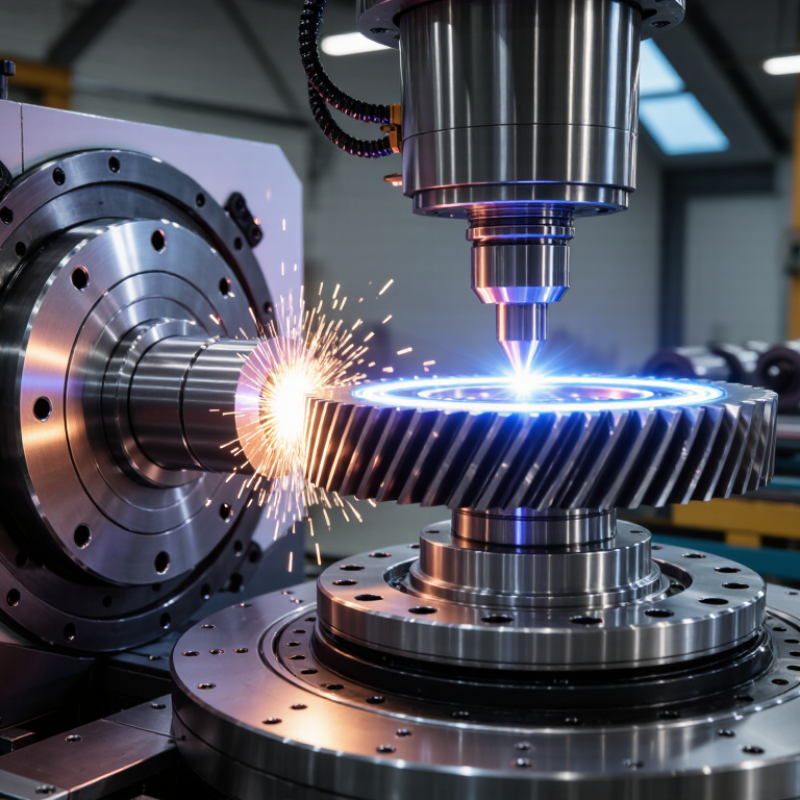
A laser quenching machine uses a focused beam to heat a selected metal surface quickly and locally. As the beam moves, the treated layer reaches a hardening temperature while the underlying material stays cooler. Heat flows inward, cooling the surface without a separate liquid-quench step. This is called self-quenching. The result can be a hard, wear-resistant layer over a tougher core.
A typical system combines a laser source, beam optics, motion controls, and a fixture that holds the part steady. Sensors and process software help manage power, travel speed, and beam position. For example, a machine can trace a narrow path around a gear tooth or along a shaft journal. The exact settings depend on the alloy, surface shape, and required hardening depth. Not every steel responds.
That matters. A good-looking surface is not proof of a sound process. Operators may need to check hardness, case depth, and distortion on sample parts before production. Reflective surfaces, sharp corners, and changing part geometry can alter how energy is absorbed. Laser quenching can reduce treated areas and avoid some masking work, but setup still takes care. A small alignment error can leave a soft band where wear is expected.
How Does the Laser Quenching Process Work?
Why Choose a Laser Quenching Machine?
How Does the Laser Quenching Process Work?
A laser quenching machine directs a concentrated beam onto a selected metal surface. The beam heats a narrow track quickly, often above the steel’s transformation temperature. The cooler material underneath draws heat away, so the treated area cools without a separate liquid quench. No coating is added. In suitable steels, this rapid cycle forms a harder microstructure near the surface while the core stays comparatively tough.
The operator controls beam power, spot size, and travel speed to shape the heated zone. A part’s geometry and surface finish matter too: a sharp corner or reflective patch may absorb energy differently. Still, the result is not magic; a small setup error can leave a soft band or create uneven hardness. That distinction matters. Process trials, hardness checks, and metallurgical inspection help confirm the result for each part and alloy. Laser treatment can limit distortion compared with heating an entire component, but it does not eliminate it. I would treat the first settings as a starting point, not a guarantee.
Which Materials and Components Can It Treat?
Why Choose a Laser Quenching Machine? Which Materials and Components Can It Treat?
Laser quenching is best suited to ferrous alloys that can form a hard martensitic surface. These include medium-carbon and alloy steels, selected martensitic stainless steels, and many gray or ductile cast irons. ASM Handbook, Volume 4A (2013), identifies steel and cast iron as established materials for laser transformation hardening. Carbon content matters: plain low-carbon steel may not achieve useful hardness without a suitable alloy or prior treatment. Not every steel qualifies.
Typical components include gear teeth, shafts, camshafts, bearing races, guide rails, and selected die surfaces. Treating only a narrow wear zone can leave the component’s core comparatively tough. ASM’s heat-treatment guidance describes laser-hardened case depths commonly in the sub-millimetre to roughly 2 mm range, depending on alloy, beam settings, and part geometry. A gear tooth may need a shallow hardened flank, while a shaft journal needs even coverage around its circumference. Reflective materials such as aluminum and copper are generally poor candidates for conventional laser quenching because they do not harden through the same transformation. In practice, this is less tidy: edges, holes, and changing section thickness can produce uneven heating. A material certificate and a trial section are sensible checks before production.
Why Choose a Laser Quenching Machine?
Laser quenching locally hardens suitable ferrous materials while leaving the component core comparatively tough. Material response depends on grade, composition, and process conditions.
How to read the chart: “Suitable” indicates that the material group can form a hardened layer through conventional laser transformation hardening when the specific grade and process are appropriate. “Not typical” indicates that this mechanism generally does not apply. Common component examples include gear teeth, shafts, camshafts, and guide rails made from suitable steels or cast irons.
What Benefits Does Laser Quenching Provide?
Laser quenching hardens selected areas without heating an entire component. A focused beam raises the surface to its transformation temperature, while the surrounding metal draws heat away. This rapid cooling can create a hard, wear-resistant layer with limited distortion.
Small zones.
That helps protect gear teeth, shaft journals, and guide surfaces that face repeated friction.
The process also allows precise control over the treated area. For example, a technician can harden a narrow track while leaving nearby sections tougher and more ductile. In many cases, this reduces the need for masking or post-treatment straightening.
Less handling can mean shorter production cycles, though results depend on material, geometry, and beam settings. They are not automatic. Surface condition and consistent part positioning matter, too.
A reflective finish or an awkward contour may complicate energy delivery. That trade-off deserves attention before investment.
Test coupons and hardness measurements help confirm whether the required depth and wear performance are achievable for the actual component.
How Can You Choose the Right Machine?
Why Choose a Laser Quenching Machine?
How Can You Choose the Right Machine?
Start with the part, not the machine’s headline power. List the material, treated area, required hardness, and target case depth. A narrow track on a steel shaft needs different optics and motion control than a broad flat surface. Measure the largest and smallest parts, too. Fit matters.
Ask for test results on your own sample material. Check hardness across the treated zone, case depth, and distortion after processing. A shiny surface alone proves very little. Also compare beam shape, power range, scanning speed, and cooling requirements. These settings affect heat input and treatment consistency. Request a sample report with the test conditions included.
Plan for the workday, not just the first trial. Consider loading time, part positioning, fume extraction, operator training, and maintenance access. A machine may meet the specification yet slow production if fixtures are awkward. I’d be cautious about choosing by power rating alone; it is an easy number to compare, but it does not tell the whole story. Run a production-like trial, and leave room for adjustment. That step can feel inconvenient. It often reveals what a brochure misses.