Garage Openers - PFC CONTROLS | Miami, Gate Operators, Sliding Gate, Swing Gate, Intercoms, Turnstiles, Bollards, Barrier gate

MENU
Go to content

Why Is Safety Lockout Important in the Workplace?

Why Is Safety Lockout Important in the Workplace?

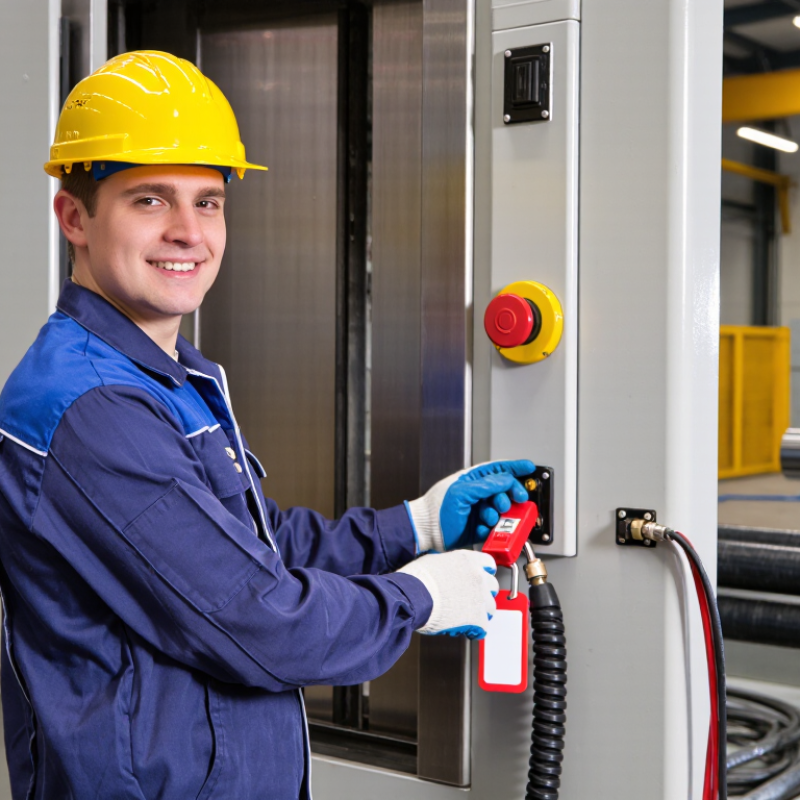
A machine can look still and remain dangerous. Stored electrical, hydraulic, pneumatic, or mechanical energy may release without warning during cleaning or repair. Safety Lockout—often called lockout/tagout, or LOTO—helps prevent that release by isolating energy sources and keeping equipment from restarting while workers service it.

The scale of the risk is significant. The U.S. Occupational Safety and Health Administration (OSHA) estimates that proper lockout/tagout practices can prevent about 120 deaths and 50,000 injuries each year. OSHA’s standard, 29 CFR 1910.147, sets out requirements for controlling hazardous energy during servicing and maintenance. These figures describe potential prevention, not a guarantee: a lock on a switch cannot protect anyone if another energy source remains live or the procedure is misunderstood.

The practical details matter. A worker may need to identify a hidden valve, release pressure, and test the machine before reaching inside. One overlooked step can undo several careful ones. As OSHA’s hazardous-energy guidance states, “The standard establishes minimum performance requirements for the control of hazardous energy.” That is an authoritative regulatory statement, rather than a personal quotation from a named industry expert. This distinction matters: attributing an unverified quote to an individual would weaken the reliability of safety guidance. Safety Lockout works best when written procedures, suitable devices, training, and verification all match the actual equipment. And when they do not, stop and reassess.
Why Is Safety Lockout Important in the Workplace?

What Safety Lockout Means in the Workplace

In the workplace, safety lockout means isolating equipment from its energy sources before maintenance, cleaning, or repair begins. A machine may look quiet while stored electricity, pressure, heat, or moving parts remain hazardous. Lockout procedures use physical devices and clear identification to show that equipment must not be restarted. The goal is simple: prevent unexpected movement or energy release while someone is working.

A reliable process starts with identifying every energy source, not just the main power switch. Workers follow site procedures to shut down equipment, isolate it, apply their personal lock, and verify that it cannot operate. Verification matters. A conveyor belt that stays still during a quick glance may still have stored tension or another connected power source. Procedures should be specific to the equipment, and workers need suitable training. In practice, steps can be missed when a procedure is unclear or rushed. That deserves attention, not blame.

Tips: Keep the equipment’s written procedure accessible near the work area. Check that each worker understands their role, and never remove another person’s lock without following the site’s established process. After isolation, test controls from a safe position and confirm the equipment remains inactive. If the energy sources are uncertain, pause and ask a qualified supervisor. Safety lockout is not just a device on a switch; it is a shared, verified routine.

Why Is Safety Lockout Important in the Workplace?

Lockout/tagout (LOTO) isolates hazardous energy before servicing or maintenance, helping prevent unexpected machine startup or energy release.

OSHA estimates that compliance with its lockout/tagout standard prevents approximately 120 fatalities and 50,000 injuries each year. These are estimated annual totals, not a comparison of risk between the two categories.

How Lockout Procedures Control Hazardous Energy

Lockout procedures control hazardous energy by physically separating equipment from its power sources and preventing unexpected restart. Energy may come from electrical circuits, hydraulic pressure, compressed air, steam, gravity, or moving parts. A stopped machine is not necessarily a safe machine. A pump can retain pressure, and a raised conveyor section can still fall.

A reliable procedure identifies every energy source, explains how to isolate it, and names the correct lockable device. Workers shut down equipment using its normal controls, isolate the sources, and apply personal locks and tags. Stored energy must then be released, restrained, or otherwise made safe. Think of a mechanic servicing a press: electrical power is isolated, air lines are drained, and the ram is secured against movement. Details matter. One missed line can change everything.

Before work begins, an authorized worker verifies isolation using an appropriate test, such as checking for zero voltage or trying the controls after confirming the area is clear. Each worker keeps control of their own lock. For group work, a lockbox can help ensure equipment stays isolated until every worker has removed their lock. Procedures should match the actual machine, and workers need training on changes or unusual conditions. In real workplaces, steps can be rushed or written too generally. That deserves a pause and a review, not a guess.

Why Is Safety Lockout Important in the Workplace? - How Lockout Procedures Control Hazardous Energy

Energy Source Potential Hazard Typical Isolation Method Verification Before Work Why Lockout Matters
Electrical Electric shock, burns, or unexpected equipment startup Open the appropriate energy-isolating device and apply a personal lock and tag according to the procedure. A qualified person tests for absence of voltage using suitable test equipment and follows the required test-before-and-after approach. It helps prevent re-energization while servicing is underway.
Mechanical or rotational Entanglement, crushing, or contact with moving parts Isolate and lock the machine’s energy supply; block or secure parts that could move. After isolation, use the established safe test method to confirm the machine cannot start or move. It controls unexpected motion during inspection, cleaning, or repair.
Hydraulic or pneumatic Sudden movement, fluid injection, or release of pressurized air or liquid Isolate and lock the supply; relieve pressure where safe and specified, and secure raised or suspended components. Check pressure indicators and confirm stored pressure has been relieved; verify that parts are securely supported. It addresses both the energy supply and pressure or motion that may remain after shutdown.
Thermal Burns, scalding, or exposure to hot or cold surfaces and materials Isolate the heating or cooling source and allow the equipment or material to reach a safe condition where required. Check temperature using an appropriate method and confirm any relevant process flow is isolated. It helps prevent exposure to hazardous temperatures during maintenance.
Chemical or process materials Toxic exposure, burns, fire, or unexpected release of material Isolate relevant lines or sources using the site procedure; drain, flush, or purge only when required and safe to do so. Confirm isolation and safe conditions using the prescribed checks, such as pressure checks or atmospheric testing when applicable. It reduces the risk of hazardous substances entering the work area unexpectedly.
Gravity or stored mechanical energy Falling, shifting, or spring-driven components Lower, block, restrain, or otherwise secure parts; release or control stored energy according to the procedure. Inspect the restraint or support and confirm the component cannot move into the work area. It helps control energy that may remain even after the primary power source is isolated.

Key practice: Follow the site-specific energy-control procedure, notify affected workers, isolate all relevant energy sources, apply personal locks and tags as required, control stored energy, and verify isolation before work begins. A tag is a warning and does not physically restrain an energy-isolating device.

Which Workers and Equipment Require Lockout

Why Is Safety Lockout Important in the Workplace?

Lockout is required when a worker may contact hazardous energy during servicing, cleaning, inspection, or jam removal. Maintenance technicians, electricians, mechanics, and contractors commonly perform this work. Production operators may also need lockout training when they adjust equipment or enter guarded areas. Temporary workers should not be overlooked. They may know the task but not the site’s energy-control procedure.

Affected employees also need clear instruction, even when they do not attach locks. They must recognize locked-out equipment and never restart, reset, or bypass a control. A supervisor should verify that each worker understands personal responsibility and release procedures. Shared tasks need individual locks, not one lock for an entire crew.

Equipment requiring lockout includes machinery with electrical, hydraulic, pneumatic, mechanical, thermal, chemical, or gravitational energy. Examples include conveyors, presses, mixers, pumps, compressors, boilers, elevators, and automated production cells. A disconnected switch may not remove stored pressure or suspended weight. Bleed valves, blocks, restraints, grounding, and pressure gauges may be necessary. Verify zero energy before work begins.

A practical check matters.

One common mistake is treating a short task as harmless. It may not be. I have seen workers focus on the power switch while ignoring a raised platform or trapped air line. That assumption needs review. Site risk assessments should identify every energy source, isolation point, and worker exposed to unexpected movement. If equipment design changes, the lockout procedure should change too.

How Safety Lockout Prevents Workplace Injuries

Why Is Safety Lockout Important in the Workplace?

How Safety Lockout Prevents Workplace Injuries

A machine can look harmless while its energy remains active. A conveyor may restart, a press may drop, or trapped air may move a cylinder without warning. Lockout/tagout procedures require workers to isolate hazardous energy and verify the equipment is safe before servicing. This matters during ordinary tasks, like clearing a jam or replacing a blade.

OSHA estimates that proper lockout/tagout practices prevent about 120 deaths and 50,000 injuries each year in the United States. These figures show the scale of preventable harm, though each incident still depends on real working conditions.

Effective lockout is a sequence, not just a padlock. Workers identify every energy source, shut down the equipment, apply personal locks, and test for isolation. A technician might try the start button and check a pressure gauge before placing hands near a guarded belt. The test is essential.

OSHA’s Control of Hazardous Energy standard covers an estimated 3 million workers who service machinery and equipment. Training should match the specific machine, including stored electrical, hydraulic, and pneumatic energy.

A checklist helps, but it cannot replace careful judgment. In practice, rushed maintenance can make even familiar equipment feel deceptively safe. Teams should pause when labels are unclear, procedures do not fit, or a lock cannot be verified.

What Steps Make a Lockout Program Effective

An effective lockout program starts with a clear inventory of machines and every energy source. Electricity is only part of the picture. Compressed air, hydraulic pressure, gravity, and stored heat can also cause harm. OSHA estimates that proper hazardous-energy control prevents 120 fatalities and 50,000 injuries each year in the United States. That estimate shows why detailed procedures matter. For each machine, document shutdown steps, isolation points, lock placement, and how to verify a zero-energy state. A labeled disconnect near a press is more useful than a vague instruction to “turn it off.”

Training must match the work. Authorized employees need hands-on practice applying personal locks and testing equipment before maintenance begins. A machine’s start button is not proof that power is isolated. OSHA’s hazardous-energy standard also calls for periodic inspections of energy-control procedures, including a review with employees. Keep records, but check understanding on the shop floor too. Paperwork can look complete while a worker still misses a trapped pneumatic line. That deserves a second look. When equipment, processes, or staffing change, revise procedures and retrain affected workers. Invite employees to report confusing steps; they often notice practical gaps that a desk review misses.

PFC CONTROLS
1638 NW 108TH AVE. MIAMI, FL 33172
Sales: (305) 593-0227
Tech: (305) 546-3965

Copyright, All rights reserved
Back to content