Garage Openers - PFC CONTROLS | Miami, Gate Operators, Sliding Gate, Swing Gate, Intercoms, Turnstiles, Bollards, Barrier gate



Why Choose an Automatic Gate Opener?
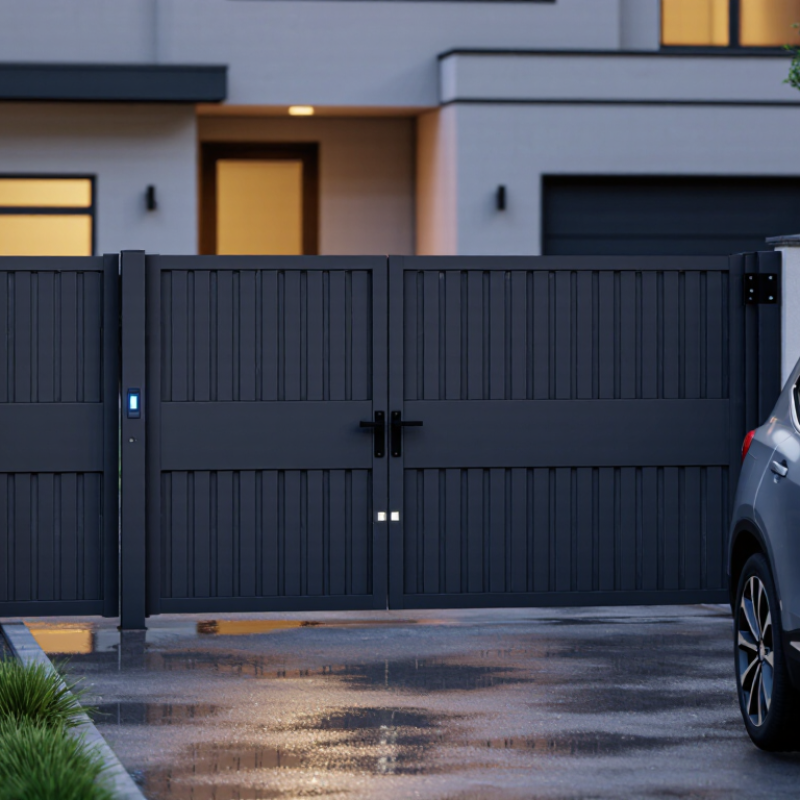
An Automatic Gate Opener is no longer just a luxury for large properties. It can turn a heavy, manual gate into a controlled access point. Picture arriving during rain, pressing a remote, and opening the gate without leaving the driver’s seat. That small improvement can make daily routines safer and more comfortable.
Market research supports this shift. Grand View Research reports that the global smart home market reached approximately USD 121.59 billion in 2023, with strong growth expected through 2030. Automated access products benefit from this wider connected-home trend. MarketsandMarkets also identifies residential security, convenience, and remote monitoring as key drivers in the automated gate and door opening system market. These figures suggest growing demand, but they do not guarantee that every opener suits every property.
Good decisions require more than attractive specifications. Field experience shows that gate weight, hinge condition, slope, wind exposure, and daily traffic affect performance. A quiet motor may still struggle with a misaligned gate. A smartphone feature may be useless when the property has weak connectivity. Safety matters even more. UL 325 and ASTM F2200 provide important guidance for entrapment protection and gate construction in the United States, while EN 12453 addresses powered-door safety in Europe. Local requirements should be checked with a qualified installer. Convenience should never replace inspection. An Automatic Gate Opener is valuable when correctly sized, professionally installed, and regularly maintained. Yet, one point deserves reflection: the cheapest system may create the highest long-term cost.
How Automatic Gate Openers Work
Why Choose an Automatic Gate Opener?
How Automatic Gate Openers Work
An automatic gate opener converts electrical power into controlled mechanical movement. A motor drives an arm, chain, or underground mechanism. The control board manages opening speed, closing force, and travel limits. When a remote, keypad, loop detector, or smart controller sends a signal, the board activates the motor. Limit switches or position sensors then stop the gate at the programmed points. The process looks simple. It is carefully timed.
Modern systems also use safety sensors. Photoelectric beams detect vehicles, children, or objects in the gate’s path. Pressure-sensitive edges can stop or reverse movement after contact. The U.S. Consumer Product Safety Commission’s Automatic Residential Gate Openers report documented 40 child fatalities and 36 injuries between 1985 and 2006. That history explains why UL 325 emphasizes monitored entrapment protection and controlled operation. A powerful motor is not enough.
Market data shows continuing demand. Grand View Research reported the global automatic gates market at approximately USD 2.2 billion in 2023. Yet installation quality often matters more than market growth. Gate weight, hinge friction, drainage, and wind exposure affect performance. A clean-looking installation can still hide poor alignment. I would check manual movement before adjusting the opener. If the gate drags by hand, the motor is compensating for a mechanical problem. That is unsafe and inefficient. Regular testing should include sensors, emergency release functions, warning signs, and battery performance. Small faults are easy to miss.
Why Choose an Automatic Gate Opener? - How Automatic Gate Openers Work
| Data Dimension | Typical Data or Operating Range | How It Relates to Automatic Gate Operation |
|---|---|---|
| Primary Power Supply | 12–24 V DC or 120–240 V AC, depending on system design | The control board distributes electrical power to the motor, sensors, receiver, and accessories. |
| Gate Types Supported | Sliding gates, swing gates, overhead gates, and barrier arms | The opener style must match the gate’s movement, structure, weight, and available installation space. |
| Drive Mechanism | Gear motor, articulated arm, linear actuator, or chain drive | The motor converts electrical energy into controlled mechanical movement to open and close the gate. |
| Typical Opening Time | Approximately 10–30 seconds for many residential gates | Actual speed depends on gate width, weight, motor capacity, travel distance, and safety settings. |
| Load Capacity | Common residential systems: about 250–1,500 kg for sliding gates; lower limits may apply to swing gates | The selected opener must be rated above the gate’s actual weight and operating resistance. |
| Control Input | Remote control, wired push button, keypad, vehicle sensor, intercom, or smartphone command | A control signal reaches the receiver or control board, which starts the programmed opening or closing cycle. |
| Position Detection | Mechanical limit switches, magnetic sensors, encoders, or current monitoring | These components tell the controller when the gate is fully open, fully closed, or moving abnormally. |
| Safety Sensors | Photocells, edge sensors, induction loops, and obstacle detection systems | If a person, vehicle, or object is detected, the system can stop or reverse the gate to reduce impact risk. |
| Automatic Closing Delay | Commonly adjustable from approximately 5–60 seconds | The timer allows the gate to close automatically after a programmed period, improving convenience and access control. |
| Backup Power | Rechargeable battery backup, commonly 12 V or 24 V | The battery can maintain basic gate operation during a temporary power outage, depending on gate size and usage. |
| Typical Standby Consumption | Often below 10 W, but the exact value varies by controller and connected accessories | Most energy is used while the motor is moving; standby power mainly supports the controller and receiver. |
| Duty Cycle | Residential, medium-duty, or high-duty operation; some systems support continuous use | Duty-cycle ratings indicate how frequently the opener can operate without overheating or excessive wear. |
| Manual Release | Key-operated or lever-operated disengagement mechanism | It allows the gate to be opened manually if power is unavailable or the opener requires servicing. |
| Main Advantages | Hands-free access, improved convenience, controlled entry, reduced manual effort, and better accessibility | Automation is especially useful for heavy gates, high-traffic entrances, bad weather, and properties requiring controlled access. |
Note: Performance ranges are typical industry values for general guidance. Actual specifications depend on gate dimensions, construction, installation conditions, climate, and system configuration.
Related Posts
-

Finding Reliable Suppliers for the Best Gate Opener Kit Around the Globe
-
What Is a Gate Opener Kit and How Does It Work?
-

Understanding the Common Issues Faced by Commercial Gate Openers
-
Best Gate Opener Kit for Your Home Security Needs?
-

Revolutionize Your Home Security with the Latest Automatic Gate Opener Innovations
-

Enhancing Home Security: The Ultimate Guide to Choosing Your Automatic Gate Opener