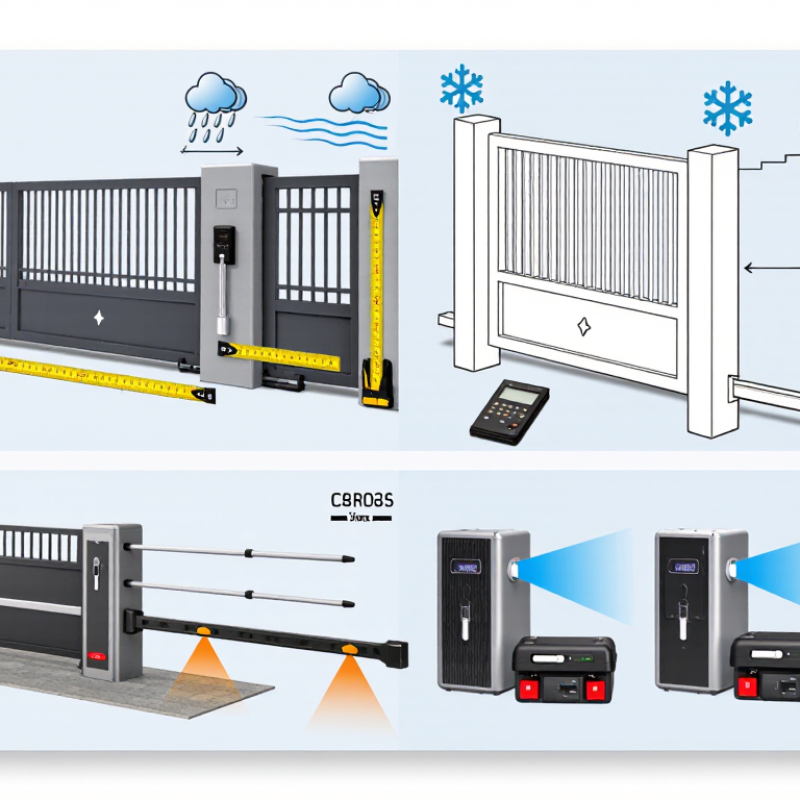
Choosing the best Gate Opener Kit starts with the gate, not the motor. Measure its weight, width, hinge condition, and opening angle. Check the driveway slope, wind exposure, and available power. A heavy steel swing gate needs different force than a lightweight aluminum sliding gate. Small details matter.
Market research shows steady demand for automated access systems. Grand View Research identifies security, convenience, and smart-home integration as major market drivers. Fortune Business Insights also reports continued growth in the global automatic gate and door market. These reports describe broad trends, not a guaranteed product choice. No universal “best” kit exists.
Professional selection should include safety and installation standards. In the United States, UL 325 addresses entrapment protection for automated gate operators. ASTM F2200 covers safety requirements for automated vehicular gates. Requirements may differ by region, so confirm local guidance with a qualified installer. Look for monitored photo eyes, obstruction detection, manual release, and battery backup. Test the sensors with a safe object before daily use.
Think about real routines. Will the gate open 20 times daily or 200? Will rain, dust, salt air, or freezing temperatures affect the mechanism? A weather-resistant enclosure and sealed control box can reduce maintenance. Warranty length matters, but service availability matters more. A cheap kit can become expensive after repeated repairs. That is easy to overlook.
Compare rated duty cycles, controller quality, remote range, app security, and replacement-part access. Record the gate dimensions before purchasing. Then review the manufacturer’s installation manual, not only the sales page. A careful choice may take longer. It usually prevents avoidable failures.
How to Choose the Best Gate Opener Kit?
Understanding Gate Opener Kits and Their Main Components
A gate opener kit is more than a motor. It is a coordinated system for controlled movement, access, and protection. The main components include the drive motor, control board, remote receiver, safety sensors, mounting hardware, and backup battery. Each part affects reliability. A powerful motor cannot compensate for weak hinges or poor alignment.
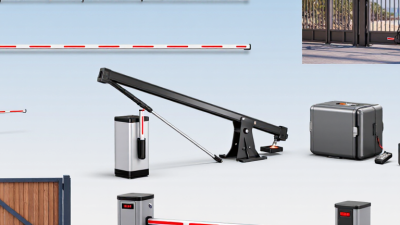
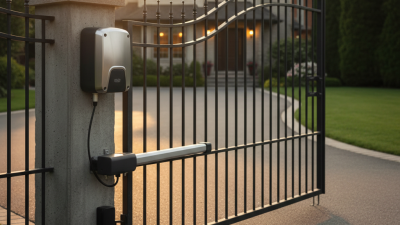
Gate style matters greatly. Sliding gates need a rack, rollers, and a suitable drive gear. Swing gates require linear or articulated arms, depending on the post position and opening angle. Measure gate weight, length, slope, and daily cycles before selecting capacity. In practical installations, underestimated cycle frequency causes overheating and premature wear. It is an easy mistake.
Safety components deserve close attention. Photoelectric sensors should stop or reverse movement when an obstacle breaks the beam. Manual release hardware should remain reachable during power failure. A weather-resistant enclosure also protects the controller from moisture and dust. The U.S. Consumer Product Safety Commission has repeatedly highlighted automated gate entrapment risks, making sensor placement a technical priority.
Market data supports this growing focus. Fortune Business Insights’ 2024 gate automation report estimates the global market will expand at roughly 7% annually through 2032. That growth reflects rising demand for residential and commercial access control. Still, market growth does not guarantee a suitable kit. An inexpensive battery may look adequate on paper. In winter, its performance can disappoint. Select components as one system, not as isolated bargains.
Understanding the gate type, gate weight, power system, safety sensors, and backup battery helps match an opener kit to the installation. The values below are common residential reference ranges; always verify the exact limits in the product specifications.
Selection guide: Sliding gates commonly require higher weight capacity, while swing gates depend more on leaf length and hinge geometry. A 24 V DC system is widely used because it supports controlled movement and battery-backup options. Photocells and manual release mechanisms are essential safety components.
Choosing a gate opener kit starts with the gate itself, not the motor’s advertised power. Sliding gates need a different drive system from swinging gates. For a swing gate, measure hinge position, opening angle, and clearance behind the panels. Uneven ground matters. Small obstacles can strain the mechanism. Record these details before comparing kits.
Measure the gate’s width and height, then estimate its total moving weight. Include steel frames, timber boards, wheels, and later-added decorations. A wide, heavy gate catches wind like a sail. Manufacturers often publish maximum limits, but those figures assume a well-balanced gate. A professional installer should check hinges, posts, foundations, and manual release access. I once underestimated a gate’s weight because its frame looked light. That was a useful mistake. The opener worked, but the hinges needed attention first.
Usage frequency also changes the right choice. A private driveway may open ten times daily, while a shared entrance can cycle constantly. Count daily openings and consider peak periods. Choose a kit with suitable duty capacity, not merely the highest force. Excessive force can hide poor alignment and increase wear. Soft-start and soft-stop features can reduce impact on gates and posts. Weather exposure deserves equal attention. Rain, dust, freezing temperatures, and salty air can affect sensors and moving parts. Read the installation manual carefully, and verify local safety requirements before purchase. Specifications are helpful, but real measurements are more trustworthy.
How to Choose the Best Gate Opener Kit?
Choosing the best gate opener kit starts with matching the mechanism to the gate’s movement. Sliding gates usually need a rack-and-pinion system with a motor beside the track. Swing gates often use articulated arms or underground operators near the hinges. Measure the gate’s weight, length, and opening angle before shopping. A powerful motor cannot correct poor alignment. I once underestimated a slightly uneven track, and the opener worked harder than expected. Small installation details matter.
The power source affects reliability every day. Mains-powered kits provide steady force but require protected wiring and a suitable outlet. Solar systems work well for remote entrances, especially when sunlight reaches the panel for several hours. Cloudy seasons can expose their weakness. Battery backup helps during outages, but battery capacity declines in cold weather. That sounds simple. It is not always. Check charging time, battery replacement access, and the gate’s daily cycle count.
Drive systems also deserve close comparison. Chain drives are practical and commonly handle heavier sliding gates, but they need cleaning and tension checks. Worm-gear drives can resist back-driving, although they may operate more slowly. Hydraulic drives offer smooth movement and strong performance, yet leaks can make maintenance less forgiving. Look for obstruction detection, manual release access, weather protection, and a realistic duty rating. The quietest option may not be the most durable one.
A reliable gate opener starts with safety, not speed. Choose obstruction sensing, automatic stop, and a manual release. Photo sensors should detect a person, pet, or bicycle crossing the opening. Test them before regular use. Keep children away during testing. Battery backup can help during outages, but it still needs inspection. I have seen poorly adjusted sensors cause repeated reversals. That small fault can become frustrating.
Compatibility deserves careful checking. Measure the gate’s weight, length, swing direction, hinge condition, and surface resistance. A heavy steel gate may need more power than a light aluminum gate. Check the available voltage and mounting space before ordering. Installation should leave cables protected from rain and moving parts. Follow the instructions closely, or hire a qualified installer for complex wiring. I once underestimated uneven ground, and alignment took longer than expected. Do not rush this step.
Tips: Mark the gate’s full travel path with chalk. Check that hinges move smoothly by hand. Keep the control unit away from standing water. Test emergency release access monthly. Clean sensor covers with a soft cloth. Inspect bolts, brackets, cables, and warning labels every few months. Listen for grinding or delayed movement. These signs often appear before a serious failure. Maintenance is easy to postpone, unfortunately. A simple written checklist makes missed inspections less likely.
How to Choose the Best Gate Opener Kit?
Selecting the right kit starts with performance, not appearance. Measure gate weight, width, slope, hinge condition, and daily opening cycles. A light residential gate may need a compact actuator, while a heavy sliding gate requires higher torque and a stronger drive system. Look for adjustable closing speed, manual release access, obstacle detection, and weather resistance. The International Electrotechnical Commission’s IEC 60335-2-103 safety standard highlights risks involving powered doors, gates, and barriers. Compliance evidence matters more than impressive packaging.
Budget should include installation, wiring, batteries, maintenance, and replacement parts. Grand View Research’s 2024 analysis identifies security and convenience as major drivers of automatic gate demand, with residential use representing a significant application segment. That trend does not mean every smart feature deserves extra money. A phone connection is useful, but poor cellular coverage can make it unreliable. Test the signal at the gate.
Site conditions often decide the real value. Coastal air can accelerate corrosion, while cold weather reduces battery performance. Solar kits suit sunny, low-cycle entrances, but shaded driveways may need a dependable wired supply. From field checks, I have found that undersized transformers cause more frustration than slow motors. Still, no checklist is perfect. Local drainage, wind exposure, and a neglected hinge can change the result. Choose a kit with accessible service parts and clear technical support.
| Gate Opener Kit Type | Recommended Gate Configuration | Typical Gate Size and Load Range | Typical Opening Speed | Daily Use Level | Typical Kit Budget | Power and Backup Options | Site Conditions | Key Advantages | Potential Limitations | Best Suited For |
|---|---|---|---|---|---|---|---|---|---|---|
| Light-Duty Swing Gate Kit | Single or double swing gates | Residential gates up to approximately 3.5 m per leaf and 250 kg per leaf, depending on hinge design and wind exposure | Approximately 12–25 seconds for a 90-degree opening | Up to about 20–30 cycles per day | Approximately US$300–800 | 120/230 V AC input; optional battery backup is commonly available | Level, stable ground with adequate clearance behind and beside the gate | Lower purchase cost, straightforward installation, and quiet operation | Less suitable for heavy gates, high wind loads, or frequent traffic | Small homes, villas, and low-traffic residential driveways |
| Medium-Duty Swing Gate Kit | Single or double swing gates | Approximately 4 m per leaf and up to 400 kg per leaf, subject to the opener's rated capacity and gate geometry | Approximately 15–30 seconds for a 90-degree opening | About 30–60 cycles per day | Approximately US$700–1,500 | AC power with battery backup; some systems support solar charging | Suitable for moderate slopes and wider driveways when the hinges and stops are correctly aligned | Good balance between lifting force, reliability, and operating cost | Requires accurate hinge alignment and sufficient swing clearance | Large residential properties, small offices, and shared private entrances |
| Heavy-Duty Swing Gate Kit | Large single or double swing gates | Approximately 5 m per leaf and 500 kg or more per leaf, depending on the mechanism and wind conditions | Approximately 20–40 seconds for a 90-degree opening | About 50–100 cycles per day | Approximately US$1,200–3,000+ | Dedicated AC supply, battery backup, and optional solar support | Best for reinforced posts, heavy frames, exposed locations, and controlled swing paths | High force capacity and better durability for demanding installations | Higher installation cost; structural reinforcement may be required | Commercial properties, estates, farms, and high-security entrances |
| Light-Duty Sliding Gate Kit | Single sliding gate on a level track or cantilever system | Approximately 4–6 m gate length and up to 400 kg, depending on the track, rollers, and counterbalance | Approximately 10–20 m/minute | Up to about 20–40 cycles per day | Approximately US$400–1,000 | AC power with optional battery backup; solar is practical in suitable locations | Requires side-run space equal to the gate travel distance and a clean, level track | Does not require inward or outward swing space; suitable for narrow driveways | Track debris, poor drainage, or gate drag can significantly reduce performance | Residential driveways with limited swing clearance |
| Medium-Duty Sliding Gate Kit | Tracked or cantilever sliding gates | Approximately 6–8 m gate length and 600–800 kg, subject to wheel condition and frame rigidity | Approximately 10–18 m/minute | About 30–80 cycles per day | Approximately US$800–2,000 | AC power, battery backup, and optional solar charging | Works well on moderate slopes when the gate foundation, rollers, and rack are properly installed | Handles heavier gates while preserving driveway space | Needs a strong foundation and regular inspection of rollers, rack, and safety edges | Apartment entrances, private communities, workshops, and busy homes |
| Heavy-Duty Sliding Gate Kit | Large tracked or cantilever sliding gates | Approximately 8–12 m gate length and 1,000 kg or more when matched with suitable hardware | Approximately 8–15 m/minute | About 60–150 cycles per day | Approximately US$1,500–4,000+ | Dedicated AC supply, high-capacity battery backup, and optional solar system | Requires engineered foundations, reliable drainage, adequate side clearance, and protected control equipment | Suitable for high traffic, large gates, and demanding commercial applications | Highest installation complexity; poor alignment can cause premature motor and gearbox wear | Factories, logistics sites, commercial compounds, and gated communities |
| Articulated-Arm Swing Gate Kit | Swing gates with limited mounting depth or unusual post geometry | Commonly used for medium-size gates; exact capacity depends on arm geometry and gate weight | Approximately 15–30 seconds for a 90-degree opening | About 20–60 cycles per day | Approximately US$700–1,800 | AC power with battery backup; solar compatibility varies by system | Useful where standard linear actuators cannot be mounted with sufficient clearance | Flexible installation on wide or recessed posts | Exposed moving arms may require additional protection and maintenance | Retrofitting existing swing gates with restricted actuator space |
| Solar-Ready Low-Voltage Kit | Light to medium swing or sliding gates | Usually suitable for residential gates within the opener's published weight and length limits | Comparable to the selected swing or sliding mechanism; battery condition affects speed | Best for low to moderate daily traffic | Approximately US$800–2,500, including a basic solar and battery setup | Solar panel and deep-cycle battery; mains power may be used as a backup where available | Requires good sunlight exposure, secure panel placement, and protection from prolonged shading | Reduces trenching requirements and can operate during mains power outages | Cloudy weather, shading, cold temperatures, and undersized batteries can reduce availability | Remote driveways, rural properties, and locations without convenient mains power |
Budget ranges and performance figures are typical planning estimates in US dollars. Actual results depend on gate weight, wind load, hinge or roller condition, installation quality, ambient temperature, power supply, and the manufacturer's published duty-cycle rating. Always select a kit with capacity above the measured gate load and verify local electrical and safety requirements.